Poli Alert Politics & Civics
Related Articles

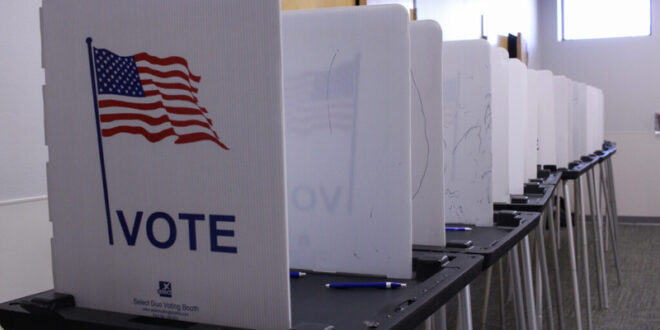
Voters in several states head to the polls Tuesday for a series of closely watched primary elections that will test the strength of progressive Democrats, the influence of President Donald Trump within the Republican Party, and the growing role of outside spending from cryptocurrency, artificial intelligence and pro-Israel advocacy groups.
The contests span New York, Maryland, Utah and South Carolina, with multiple congressional races serving as early indicators of where both parties are headed ahead of the 2026 midterm elections.
Progressive Wing Faces Major Tests
Several Democratic primaries in New York have become battlegrounds between establishment figures and candidates aligned with the party’s progressive movement.
Much of the attention is focused on races tied to New York City Mayor Zohran Mamdani, whose rapid rise has made him one of the most influential progressive voices in Democratic politics.
In New York’s 10th Congressional District, Rep. Dan Goldman faces a challenge from former New York City Comptroller Brad Lander. Goldman has secured endorsements from Gov. Kathy Hochul and members of House Democratic leadership, while Lander is backed by progressive figures including Sen. Bernie Sanders, Sen. Elizabeth Warren and Mamdani.
The race has also highlighted divisions over U.S. policy toward Israel. Goldman has received support from pro-Israel organizations, while Lander has been sharply critical of Israel’s military campaign in Gaza and supports legislation that would restrict certain U.S. arms transfers.
Another closely watched race is unfolding in New York’s 13th District, where Rep. Adriano Espaillat faces challenger Darializa Avila Chevalier, a democratic socialist backed by Mamdani and Justice Democrats. The contest has become a broader debate over the future direction of the Democratic Party, despite Espaillat’s longstanding progressive credentials on immigration and housing issues.
An open-seat race in New York’s 7th District is also drawing attention. Brooklyn Borough President Antonio Reynoso and state Assemblymember Claire Valdez are competing to replace retiring Rep. Nydia Velázquez, with progressive activists closely watching the outcome.
Millions in Outside Spending Shape Contests
Several races have attracted unprecedented levels of outside spending.
In New York’s 12th District, competing artificial intelligence interests have poured millions into a Democratic primary to replace retiring Rep. Jerry Nadler. The race features state legislators Alex Bores and Micah Lasher, along with several other candidates, including Jack Schlossberg and George Conway.
Groups aligned with OpenAI and other technology investors have spent heavily opposing Bores because of his support for additional AI regulations. Meanwhile, organizations supported by rival AI interests have backed his campaign.
Maryland’s race to replace retiring Rep. Steny Hoyer has also become a major spending battleground. State Del. Adrian Boafo has received support from pro-Israel and cryptocurrency-backed groups, while former U.S. Capitol Police officer Harry Dunn continues to attract national attention and grassroots fundraising support.
Trump Influence Faces New Tests
Republicans will also be watching several key races to measure Trump’s influence within the party.
In South Carolina, the Republican gubernatorial runoff features Lt. Gov. Pamela Evette and Attorney General Alan Wilson. Trump initially endorsed Evette but later issued a dual endorsement backing both candidates after Wilson gained support from other defeated contenders.
In New York’s 21st District, businessman Anthony Constantino, a Trump-backed candidate known for high-profile pro-Trump displays, is competing against state Assemblyman Robert Smullen for the Republican nomination in a heavily Republican district.
Trump has also endorsed several Republican incumbents in Utah who face primary challenges.
Incumbents Under Pressure
Maryland’s 6th Congressional District features one of the cycle’s most expensive Democratic primaries. Rep. April McClain Delaney faces former Rep. David Trone, who has personally invested millions of dollars into his campaign.
The race has focused heavily on immigration policy, Democratic messaging and Trump’s influence on national politics.
Several New York incumbents, including Reps. Grace Meng, Yvette Clarke and Ritchie Torres, also face primary challengers, though those contests have drawn less national attention.
Redistricting Creates New Political Opportunities
The effects of recent redistricting battles are also evident in several races.
In Utah, a court-ordered redraw created a more competitive congressional district centered around Salt Lake City. Former Rep. Ben McAdams, state Sen. Nate Blouin and other candidates are competing in the Democratic primary for a seat that could become one of the party’s best pickup opportunities in the state.
Meanwhile, Maryland Senate President Bill Ferguson faces his most serious primary challenge in more than a decade after disputes over redistricting divided state Democrats.
General Election Stakes Already Emerging
Beyond the primary battles, several races are already shaping up as critical general election contests.
Democrats are focused on New York’s 17th Congressional District, where Republican Rep. Mike Lawler is expected to face a highly competitive reelection campaign. Meanwhile, Republicans are targeting Democratic-held seats on Long Island and in upstate New York as part of their effort to maintain control of the House.
With ideological divisions, outside spending and high-profile endorsements all playing major roles, Tuesday’s primaries are expected to provide one of the clearest snapshots yet of the political forces shaping the 2026 election cycle.