Poli Alert Politics & Civics
Related Articles



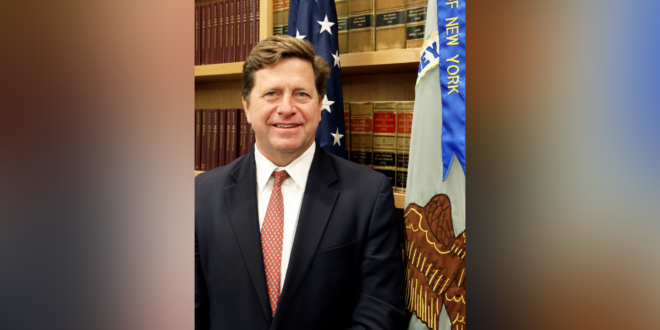
President Donald Trump announced Wednesday that he is delaying the nomination of federal prosecutor Jay Clayton to serve as director of national intelligence, linking the move to a broader effort to pressure Congress into passing a voter identification bill and renewing a key federal surveillance authority.
In a lengthy post on Truth Social, Trump said he will keep housing official Bill Pulte in the role of acting director of national intelligence while lawmakers consider both the surveillance program and what he called the SAVE AMERICA Act, legislation that would require voters to present identification before casting ballots.
The decision temporarily halts what had been a fast-moving confirmation process for Clayton, the U.S. attorney for the Southern District of New York and former chairman of the Securities and Exchange Commission.
Clayton had been scheduled to appear before the Senate Intelligence Committee on Wednesday, with a committee vote on his nomination expected as early as Thursday.
Trump said Democrats failed to honor what he described as an agreement to renew the Foreign Intelligence Surveillance Act authorities after he withdrew Pulte’s nomination and selected Clayton instead. He also cited concerns about removing Clayton from his current post before a successor is confirmed.
“Therefore, to add a slight bit of intrigue but, for the Good of the Nation, and the People of our Country, I will not approve FISA without THE SAVE AMERICA ACT going along with it,” Trump wrote.
The move injects uncertainty into negotiations surrounding the surveillance authority, portions of which recently expired amid growing bipartisan disagreements over intelligence oversight and privacy protections.
Pulte Nomination Faced Bipartisan Resistance
Trump initially tapped Bill Pulte, a senior housing administration official, to lead the nation’s intelligence agencies. The nomination immediately drew criticism from both Democrats and some Republicans who questioned Pulte’s lack of intelligence and national security experience.
Democrats were particularly vocal in their opposition, arguing that Pulte’s appointment risked undermining confidence in the intelligence community.
“One thing we know about Bill Pulte is he will do whatever Donald Trump says,” Sen. Mark Warner, the top Democrat on the Senate Intelligence Committee, said during a recent television appearance.
Warner said intelligence officials and foreign partners had privately expressed concerns about Pulte’s potential leadership of the intelligence apparatus.
During his tenure overseeing federal housing programs, Pulte attracted controversy for publicly accusing several Trump critics of mortgage-related misconduct, further fueling opposition to his nomination.
Clayton Seen as More Traditional Choice
Clayton’s nomination was widely viewed as an attempt by the White House to ease concerns among lawmakers and move forward with renewing surveillance authorities.
A veteran corporate attorney and former SEC chairman during Trump’s first term, Clayton currently leads the U.S. Attorney’s Office for the Southern District of New York, one of the nation’s most prominent federal prosecutorial offices.
The district is known for handling high-profile financial crime, corruption and white-collar criminal cases.
His nomination had been expected to receive a smoother reception than Pulte’s, though Trump’s latest decision effectively places the confirmation process on hold.
Voting Bill Faces Uncertain Future
Trump’s demand that Congress pair surveillance reauthorization with passage of a voter ID bill presents a significant challenge for lawmakers.
While Republicans control both chambers of Congress, the legislation currently lacks sufficient bipartisan support to guarantee passage. Democrats have largely opposed federal voter identification mandates, arguing they could create barriers to voting.
The president’s decision now ties two contentious policy debates together, complicating efforts to revive surveillance authorities and potentially delaying action on both issues.
Trump made the announcement while attending the Group of Seven summit in Evian-les-Bains, France, where leaders of major industrialized nations gathered to discuss global security, trade and economic challenges.
The White House has not indicated when Clayton’s confirmation process might resume.