Poli Alert Politics & Civics
Related Articles

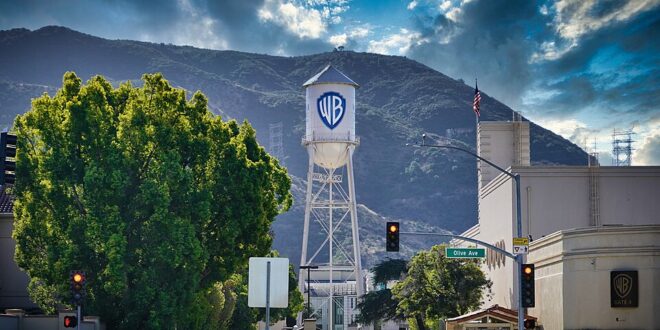
The Justice Department’s Antitrust Division has approved Paramount’s proposed $111 billion acquisition of Warner Bros. Discovery, clearing one of the most significant regulatory hurdles facing a deal that could reshape the entertainment industry and create a new media giant capable of competing more aggressively with streaming leaders.
The decision, announced Friday after an eight-month federal review, allows Paramount to move forward with plans to combine its media assets with those of Warner Bros. Discovery, the company behind CNN, HBO Max, Warner Bros. Pictures, and numerous television networks and production studios.
The merger would unite two of Hollywood’s most storied studios while combining Paramount+ and HBO Max into a streaming platform with roughly 200 million subscribers worldwide.
Justice Department officials concluded that the transaction is unlikely to substantially reduce competition and declined to challenge the merger, according to individuals familiar with the review. Regulators approved the deal without requiring divestitures, behavioral restrictions, or other concessions.
DOJ Finds No Threat to Competition
In a statement, the Justice Department said investigators reviewed more than 2 million documents, conducted extensive interviews and depositions, and coordinated with state attorneys general before determining the merger was unlikely to harm consumers.
“The transaction is not likely to result in harm to competition or American consumers,” the department said, adding that the combined company could strengthen competition across streaming, television, and film by creating a larger rival to dominant technology and entertainment platforms.
A spokesperson for Paramount welcomed the decision, arguing the merger would help the company compete in an increasingly consolidated media landscape.
“The combination will create a stronger company better positioned to compete against dominant technology platforms in an industry increasingly defined by intense competition for audiences, talent, technology, and investment,” the company said.
Merger Faces Remaining State Scrutiny
Despite the federal approval, the transaction still faces potential legal challenges at the state level.
California Attorney General Rob Bonta confirmed that his office continues to investigate the merger and retains the authority to challenge the deal independently.
“The merger of Warner Bros and Paramount remains under investigation by the California Department of Justice,” a spokesperson for Bonta’s office said.
State attorneys general from California, New York, and several other states participated in portions of the federal review process, including discussions with Paramount executives.
Ellison Played Direct Role in Approval Effort
The review process intensified in recent months as Paramount executives sought to convince regulators the deal would strengthen rather than weaken competition.
Paramount CEO David Ellison reportedly met multiple times with Justice Department officials, including a lengthy session three weeks ago in which regulators questioned him extensively about the merger’s competitive impact.
Ellison’s father, Larry Ellison, is a longtime ally of President Donald Trump, adding political attention to a transaction already under heavy scrutiny.
The merger gained momentum after streaming giant Netflix withdrew from a competing pursuit of Warner Bros. Discovery, allowing Paramount’s bid to emerge as the leading offer.
Hollywood Workers Fear Layoffs
While executives have portrayed the merger as necessary to compete in a rapidly changing media market, critics across Hollywood have expressed concern about potential job losses and further industry consolidation.
Labor groups and industry observers warn that promised cost savings could come through workforce reductions and fewer opportunities for creators.
Earlier this year, Paramount Chief Operating Officer Andy Gordon told analysts the company expects more than $6 billion in operational synergies within three years of closing the transaction. Executives have said most savings would come from non-labor sources, though skepticism remains among unions and entertainment workers.
Bitter Battle With Netflix
The review process was marked by an increasingly public lobbying fight.
This week, Paramount accused Netflix of orchestrating what it described as a “scorched-earth campaign” against the merger by encouraging labor organizations and advocacy groups to oppose the deal.
Netflix rejected the allegation, calling the claims “absurd.”
The dispute underscored the high stakes surrounding a merger that would dramatically reshape the competitive landscape for streaming services, film studios, television networks, and digital content distribution.
With federal approval secured, Paramount can move closer to finalizing one of the largest media mergers in recent history. If completed, the deal would create a media powerhouse with expanded streaming reach, a massive content library, and significant influence across film, television, and digital entertainment.