Poli Alert Politics & Civics
Related Articles

A fragile ceasefire between the United States and Iran showed signs of unraveling Tuesday as both sides exchanged fire and threats over President Donald Trump’s new military initiative to reopen the Strait of Hormuz.
Dubbed “Project Freedom,” the effort aims to use U.S. military escorts to push commercial shipping through the vital oil transit corridor, which Iran has effectively choked off in recent weeks, disrupting global trade and driving up energy prices.
But the operation immediately drew a forceful response from Tehran, with Iranian forces launching attacks on U.S. naval escorts and commercial vessels, while also striking a neighboring Gulf state for the first time in weeks.
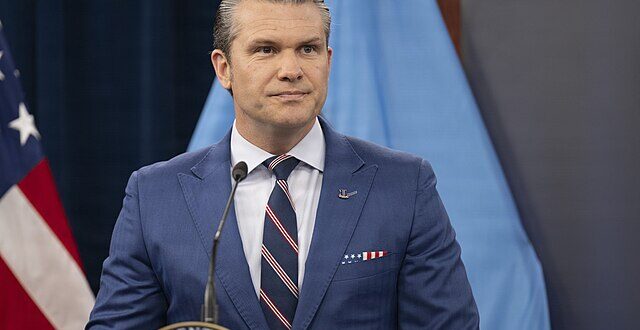
Despite the escalation, Defense Secretary Pete Hegseth insisted the ceasefire remains intact.
“The ceasefire is not over,” Hegseth said during a Pentagon briefing, even as U.S. forces reported multiple engagements in and around the strait.
Gen. Dan Caine, chairman of the Joint Chiefs of Staff, said Iran has attacked U.S. forces more than 10 times since the ceasefire was announced, though he characterized the incidents as “below the threshold of restarting major combat operations.”
According to U.S. officials, Iranian forces fired cruise missiles and deployed drones and small boats against U.S. Navy escorts and commercial ships Monday. No American vessels were hit, and Trump said U.S. forces destroyed eight Iranian boats in response.
The U.S. military said two American-flagged merchant vessels successfully transited the strait under escort, while shipping giant Maersk confirmed one of its carriers passed through with U.S. protection.
Hegseth described the mission as a global benefit, saying the U.S. had established a “powerful red, white and blue dome” over the strait to safeguard commerce.
Yet Iran disputed those claims, denying that any successful commercial crossings had occurred and asserting that its naval forces had not suffered damage.
Iranian officials struck a defiant tone. Parliamentary Speaker Mohammad Bagher Ghalibaf warned that Iran has “not even begun yet,” while Foreign Minister Abbas Araghchi dismissed the U.S. operation as ineffective, calling it “Project Deadlock.”
The confrontation spilled beyond U.S.-Iran exchanges. The United Arab Emirates said it intercepted multiple missiles and drones launched from Iran, with one attack sparking a fire at an oil facility and injuring three Indian nationals.
A South Korean-operated vessel was also damaged by an explosion and fire near the strait, prompting Trump to call on South Korea to join the U.S.-led effort to secure shipping lanes.
Iran did not directly confirm responsibility for those incidents but warned regional actors against becoming further entangled in the conflict.
The escalating clashes have raised fresh doubts about the durability of the ceasefire and prospects for a broader peace deal.
Trump warned Iran that any successful attack on U.S. ships would trigger overwhelming retaliation, saying Iranian forces would be “blown off the face of the Earth.”
Meanwhile, diplomatic efforts continued behind the scenes. China — a key Iranian partner — faces growing pressure to help broker a resolution, as Araghchi prepared for a visit to Beijing.
Pakistan, which has served as a mediator in earlier talks, urged restraint.
“It’s absolutely essential that the ceasefire be upheld,” Prime Minister Shehbaz Sharif said, calling for space for diplomacy.
Global markets reacted cautiously. Oil prices retreated slightly but remained above $100 per barrel, while U.S. gas prices continued climbing, reflecting ongoing uncertainty.
Shipping companies also expressed skepticism about whether “Project Freedom” can quickly restore normal traffic through the strait.
“There is still a huge amount of uncertainty as to what ‘Project Freedom’ actually means,” said John Stawpert of the International Chamber of Shipping.
Industry leaders said many shipowners remain hesitant to risk vessels and crews until both sides demonstrate sustained restraint.
For now, the situation in the Strait of Hormuz remains volatile — caught between a nominal ceasefire and active, if limited, hostilities.
While U.S. officials frame the operation as a temporary effort to stabilize global التجارة, Iran’s resistance and continued skirmishes underscore how quickly the conflict could escalate once again.