Poli Alert Politics & Civics
Related Articles



New York City has established its first-ever Mayor’s Office of Deed Theft Prevention, launching a coordinated effort to combat a longstanding form of real estate fraud that has disproportionately impacted vulnerable homeowners across the five boroughs.
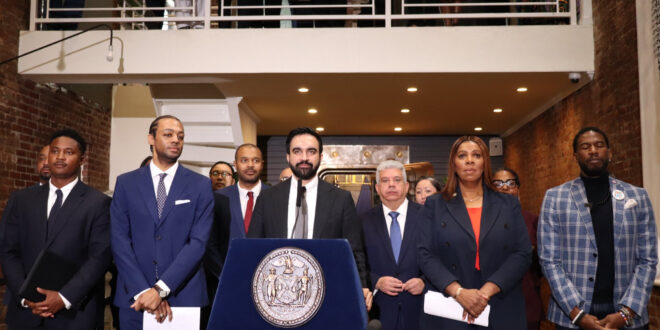
Mayor Zohran Mamdani announced the initiative on April 24, describing it as a “whole-of-government” response to deed theft — a scheme in which criminals use forged documents or fraudulent filings to illegally transfer ownership of homes without the owner’s knowledge.
City officials said the new office, housed within the Department of Finance, will focus on preventing fraud before it occurs, strengthening enforcement and helping residents who have already been targeted.
Deed theft has emerged as a persistent issue in New York City over the past decade, with more than 3,500 complaints reported since 2014, according to city data. The problem has been especially acute in boroughs like Brooklyn and Queens, which together account for the majority of cases.
Advocates and officials say the true scope of the issue is likely larger, as many incidents go unreported.
The schemes often target longtime homeowners — particularly older adults or those experiencing financial hardship — who may be less likely to detect or challenge fraudulent activity. Black and Latino homeowners have been disproportionately affected, contributing to widening racial wealth gaps and destabilizing communities.
Deed theft is typically carried out through forged signatures, falsified records or deceptive transactions that exploit gaps in property oversight systems. While such actions are criminal offenses, enforcement has historically been fragmented across agencies.
The new office is intended to centralize those efforts, improving coordination between agencies responsible for property records, law enforcement and consumer protection.
Officials say the initiative will also focus on early detection, including identifying suspicious property filings before fraudulent transfers are finalized — a shift toward prevention rather than solely responding after the fact.
City leaders said the Mayor’s Office of Deed Theft Prevention will serve as a hub for multiple agencies, including the Sheriff’s Office, the Department of Housing Preservation and Development, the NYC Commission on Human Rights and the Department of Consumer and Worker Protection.
The office will work to investigate and prosecute cases in coordination with law enforcement, while also connecting affected homeowners with legal assistance and financial resources.
In addition, the city plans to expand public education efforts to help residents recognize warning signs of deed theft and protect themselves from scams.
The announcement comes alongside a broader housing policy move: a six-month pause on New York City’s tax lien sale program. Officials said the pause will allow for a comprehensive review of the system, which has historically allowed private entities to purchase liens on delinquent properties — sometimes contributing to situations where homeowners become vulnerable to exploitation.
Housing advocates have long called for stronger protections against deed theft, arguing that the practice strips families of generational wealth and undermines neighborhood stability.
Supporters of the new office say a centralized, citywide strategy could help close enforcement gaps and provide more consistent support for victims.
However, some policy experts note that the effectiveness of the initiative will depend on implementation, including how well agencies coordinate and whether sufficient resources are allocated for enforcement and outreach.
The creation of the office reflects growing national attention to property fraud and housing insecurity, particularly in urban areas with high home values and complex ownership systems.
In New York City, where homeownership is closely tied to long-term financial stability, officials have increasingly framed deed theft as both a consumer protection issue and a matter of economic justice.
The pause on tax lien sales further underscores concerns about systemic inequities in how property debt is managed. Critics have argued that such systems can disproportionately impact low-income homeowners, sometimes pushing them into financial distress that makes them more susceptible to fraud.
City officials said the new office will begin coordinating across agencies immediately, with a focus on improving data-sharing and identifying high-risk cases.
The review of the tax lien sale program is expected to conclude within six months, after which the city may propose reforms aimed at creating a more equitable system.
In the meantime, officials are urging homeowners to remain vigilant and take advantage of new resources designed to prevent fraud and protect property rights.