 Poli Alert Politics & Civics
Related Articles



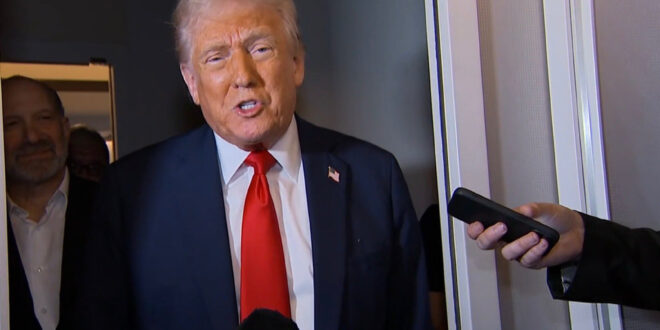
President Donald Trump has repeatedly suggested he may grant sweeping pardons to top administration officials before leaving office, according to reporting from The Wall Street Journal, raising new concerns about how far he could go in wielding one of the presidency’s most expansive powers.
“I’ll pardon everyone who has come within 200 feet of the Oval,” Trump said in a recent meeting, drawing laughter from those present, according to people with knowledge of the comments. Others said the president has made similar remarks in separate settings, at times joking that the distance could shrink to just 10 feet.
While some aides initially viewed the comments as humor, Trump’s repeated references to broad clemency have led others inside the administration to believe he may be serious about extending legal protections to allies and staff.
The remarks come as Trump and his team prepare for the possibility that Democrats could regain control of the House in November and launch investigations into his administration’s actions, including his use of the Justice Department and prior pardons. Advisers said the president has privately discussed ways to counter such scrutiny.
The Constitution grants presidents broad authority to issue pardons, and Trump has used that power more aggressively in his second term than any modern predecessor. He has issued roughly 1,600 pardons and commutations, many benefiting political allies, donors or individuals with personal ties to him.
Some of those decisions have drawn bipartisan criticism, including clemency granted to a cryptocurrency executive whose company had connections to Trump’s own digital currency venture, as well as to a former Honduran president convicted of conspiring with drug traffickers.
Trump’s use of clemency marks a sharp increase from his first term, when he issued fewer than 250 pardons and commutations.
According to current and former aides, the president has increasingly raised the prospect of pardons in conversations with officials concerned they could face legal exposure for actions taken while carrying out his agenda. Those discussions have sometimes followed warnings about potential congressional subpoenas or criminal investigations.
White House press secretary Karoline Leavitt dismissed concerns about the remarks, characterizing them as jokes while emphasizing the scope of presidential authority.
“The Wall Street Journal should learn to take a joke,” she said, adding that “the president’s pardon power is absolute.”
Still, some former officials warn that even joking references to blanket pardons could have real-world consequences. Liz Oyer, a former Justice Department pardon attorney, said such signals could encourage officials to act more aggressively if they believe they will ultimately be shielded from legal consequences.
“It seems like he previewed many times his intent to use the pardon power to bail out those who carry out his agenda faithfully,” Oyer said.
Trump has long argued he was unfairly targeted by law enforcement after facing multiple criminal cases following his first term. While several of those cases were dismissed, he was convicted in a New York state case, where presidential pardon power does not apply.
Advisers say that experience has shaped his thinking, reinforcing his desire to protect himself and those around him from future legal jeopardy.
During his first term, Trump occasionally floated the idea of pardoning aides or officials but did not follow through. Now, as he raises the prospect more frequently, some inside his orbit view the comments as more than just jokes — and potentially a preview of how he could use clemency power before leaving office.
Meta description:

