Poli Alert Politics & Civics
Related Articles



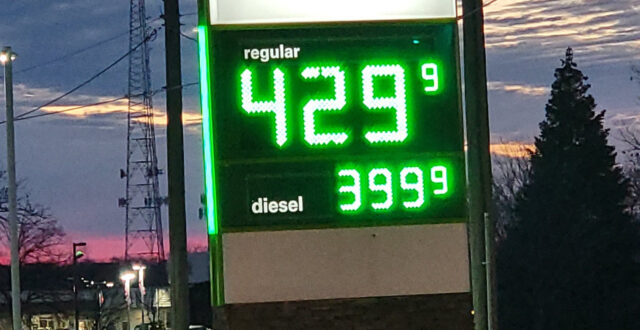
The average U.S. price for a gallon of gasoline climbed above $4 on Tuesday for the first time since 2022, as escalating conflict involving Iran disrupts global oil flows and drives up energy costs.
Data from AAA showed the national average reached $4.02 per gallon, capping a sharp rise of more than $1 over the past month.
The surge follows military strikes by the United States and Israel on Iran, triggering retaliatory actions that have severely constrained oil shipments through a critical global chokepoint.
Oil markets roiled by supply shock
At the center of the disruption is the Strait of Hormuz, a narrow waterway off Iran’s southern coast through which roughly one-fifth of the world’s oil supply typically passes.
Since the conflict escalated, Iran has effectively restricted tanker traffic through the strait, warning it could target vessels linked to the United States or its allies. Several ships have already been struck, and overall traffic has plunged.
Ship tracking data shows tanker movement through the strait is down more than 90% compared to pre-conflict levels, leaving many vessels stranded in the Persian Gulf and delaying deliveries to global markets.
Crude prices surge to multi-year highs
The supply disruption has sent crude prices sharply higher.
West Texas Intermediate crude has climbed more than 50% since late February, surpassing $100 per barrel for the first time since Russia’s 2022 invasion of Ukraine.
Meanwhile, Brent crude has jumped nearly 60% over the same period and is on track for one of its largest monthly gains on record.
Oil prices had already been trending upward earlier this year amid fears of a broader regional conflict, amplifying the impact once hostilities began.
Ripple effects hit consumers and businesses
The spike in crude prices is quickly translating into higher costs across the economy.
Diesel fuel — essential for trucking, agriculture and public transit — has surged to $5.45 per gallon, more than $1.80 higher than a year ago.
Economists warn the increases could weigh on consumer spending.
“This rise in gasoline spending could potentially dampen consumers’ ability to spend on discretionary categories,” analysts at Bank of America said in a recent note.
Researchers at the Stanford Institute for Economic Policy Research estimate the average U.S. household will spend an additional $740 on gasoline this year.
Industry analyst Andy Lipow said the broader economic impact is still unfolding, particularly as higher diesel costs filter through supply chains.
“The full effects of the higher diesel prices has yet to be felt and that will flow through the economy over the next few months,” Lipow said.
Global economic risks intensify
While U.S. consumers are facing rising fuel costs, the impact is even more severe abroad.
Oil-dependent economies in Europe and Asia are confronting inflation spikes, fuel rationing and slowing growth as energy supplies tighten.
The disruption underscores the global economy’s vulnerability to geopolitical shocks in key energy-producing regions — particularly when they affect critical transit routes like the Strait of Hormuz.
Energy analysts say prices will likely remain volatile as long as tensions persist and shipping through the strait remains constrained.
Any further escalation — or prolonged disruption — could push oil and gasoline prices even higher, deepening the economic impact for consumers worldwide.