Poli Alert Politics & Civics
Related Articles


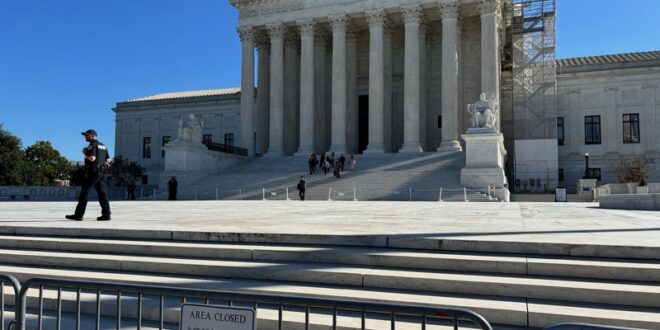
The U.S. Supreme Court will hear arguments this week in a case that could redefine one of the most fundamental guarantees of American law: who is entitled to citizenship at birth.
At the center of Trump v. Barbara is whether Donald Trump can limit birthright citizenship through executive action — a move that would challenge more than a century of constitutional interpretation.
A ruling, expected by early summer, could reshape immigration policy, alter the legal meaning of the Fourteenth Amendment to the United States Constitution and affect generations of future Americans.
A direct challenge to settled law
The 14th Amendment’s Citizenship Clause, ratified in 1868 after the Civil War, established that “all persons born or naturalized in the United States” are citizens, provided they are “subject to the jurisdiction thereof.”
For decades, that language has been broadly understood to guarantee citizenship to nearly anyone born on U.S. soil — regardless of their parents’ immigration status.
That interpretation was cemented in United States v. Wong Kim Ark, where the Supreme Court ruled 6-2 that a man born in San Francisco to Chinese immigrant parents was a citizen. The decision drew heavily on English common law principles of jus soli — citizenship by place of birth.
Legal scholars have long viewed Wong Kim Ark as the cornerstone of modern birthright citizenship.
Trump’s executive order directly challenges that understanding.
The administration’s argument: redefining “jurisdiction”
The Trump administration argues that the phrase “subject to the jurisdiction thereof” has been interpreted too broadly for decades.
In filings, Solicitor General D. John Sauer contends that the clause should apply only to individuals who owe “complete” or “direct” allegiance to the United States — a category that, the administration says, excludes people in the country unlawfully or temporarily.
Under that interpretation, children born to undocumented immigrants or temporary visa holders would not automatically receive citizenship.
Administration officials argue that the current system incentivizes illegal immigration and so-called “birth tourism,” and that correcting this interpretation is within executive authority.
Critics, however, say that argument attempts to rewrite both constitutional text and precedent without congressional action or a constitutional amendment.
Opponents: a constitutional line the executive cannot cross
Challengers, led by the American Civil Liberties Union and a coalition of advocacy groups, argue the order violates both the Constitution and federal statute.
They point not only to Wong Kim Ark, but also to the Immigration and Nationality Act, which codified the same citizenship language in 1952, reinforcing Congress’ understanding of birthright citizenship.
Their central claim is straightforward: the Constitution guarantees citizenship at birth with only narrow exceptions — such as children of foreign diplomats or hostile occupying forces — and those exceptions do not include immigration status.
Accepting the administration’s view, they argue, would mark a “constitutional revolution” with consequences far beyond immigration policy.
A case shaped by procedural twists
The dispute arrives at the Supreme Court after a complex legal path.
Lower courts blocked the executive order soon after it was issued, finding it likely unconstitutional. But a separate Supreme Court decision last year curbed the ability of federal judges to impose nationwide injunctions, forcing challengers to reframe their case.
A federal judge in New Hampshire then certified a nationwide class of affected children, again halting enforcement — setting the stage for the Supreme Court to take up the issue directly.
Notably, no lower court has accepted the Trump administration’s interpretation of the Citizenship Clause.
What’s truly at stake
While the case focuses on future births, its implications could extend much further.
A ruling for the administration would not automatically strip citizenship from existing Americans. But legal experts warn it could open the door to broader challenges over time — particularly if courts revisit the meaning of citizenship more generally.
Opponents, including more than 200 Democratic lawmakers, argue the administration’s reasoning could destabilize the legal foundation of citizenship itself.
At the same time, supporters of the policy see the case as a long-overdue correction to what they view as judicial overreach and misinterpretation.
A test of executive power
Beyond immigration, the case also raises fundamental questions about presidential authority.
At issue is whether a president can reinterpret constitutional language through executive action — or whether such a shift requires Congress or a constitutional amendment.
That question could have ripple effects across other areas where executive authority and constitutional interpretation intersect.
A pivotal moment for the court
The case represents one of the most consequential legal tests of Trump’s second term.
It follows a recent ruling in which the Supreme Court struck down key tariffs imposed by the administration, signaling a willingness by the justices to check executive power in certain contexts.
How the court rules here — particularly its conservative majority — could define the boundaries of both immigration policy and constitutional interpretation for years to come.
What comes next
Arguments are set for Wednesday, with a decision expected by late June or early July.
Whatever the outcome, the ruling is likely to become a defining moment in the modern legal understanding of citizenship — and a major marker of how far presidential power can reach.