 Poli Alert Politics & Civics
Related Articles


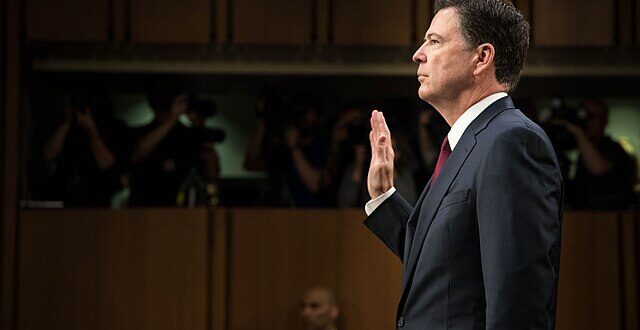
Former FBI Director James Comey has been subpoenaed as part of a sweeping federal investigation examining the origins of the 2016 Russia probe and subsequent prosecutions tied to President Donald Trump, according to two sources familiar with the matter.
The investigation is being led by Jason A. Reding Quiñones, the U.S. attorney for the Southern District of Florida, and has been described by Trump allies as a “grand conspiracy” probe into actions taken by federal officials during and after the 2016 presidential election.
An attorney for Comey declined immediate comment, and Quiñones’ office did not respond to requests for comment. The subpoena was first reported by Axios.
Expanding Inquiry Into Russia Investigation
The probe builds on earlier reporting that Attorney General Pam Bondi directed Justice Department prosecutors to reexamine decisions and actions surrounding the federal investigation into Russian interference in the 2016 election.
That original inquiry, conducted by U.S. intelligence and law enforcement agencies, concluded that Russia interfered in the election, though it did not establish a criminal conspiracy between Trump’s campaign and Moscow.
The new investigation appears to focus on whether officials involved in those earlier efforts engaged in misconduct or coordinated actions that could constitute a broader conspiracy.
Legal Hurdles and Strategy
A central challenge for prosecutors is the statute of limitations, which typically bars charges for conduct occurring more than five years ago. However, Trump allies have argued that alleged conspiratorial actions may have continued into a more recent timeframe, potentially keeping portions of the case legally viable.
More than 130 subpoenas have already been issued in connection with the probe, one source told NBC News, signaling the scope and intensity of the investigation.
Federal prosecutors have broad authority to issue subpoenas seeking documents or testimony, often without prior judicial review. Court involvement generally occurs only if a recipient challenges a subpoena, such as by filing a motion to quash.
Prior Legal Battles
The Justice Department has previously attempted to bring a case against Comey related to his congressional testimony, though that effort was dismissed by a federal judge who ruled that the prosecutor, Lindsey Halligan, had been improperly appointed.
In that ruling, the judge described Halligan as “a former White House aide with no prior prosecutorial experience.” The Justice Department has since appealed the decision, defending the legality of her appointment.
Political and Institutional Implications
The renewed scrutiny of the 2016 investigation underscores ongoing political divisions over the origins and conduct of the Russia probe, which has remained a flashpoint in Washington for nearly a decade.
Supporters of the new inquiry argue it is necessary to restore public trust and ensure accountability within federal law enforcement. Critics, however, have characterized similar efforts in the past as politically motivated attempts to revisit settled investigations.
What Comes Next
It remains unclear whether Comey will challenge the subpoena or provide testimony as part of the investigation. The broader probe’s trajectory — including whether it results in charges — will likely hinge on legal questions surrounding timing, evidence and prosecutorial authority.
The outcome could have far-reaching implications for how the Justice Department revisits past high-profile investigations and the limits of federal prosecutorial power.

