Poli Alert Politics & Civics
Related Articles

President Donald Trump said Monday that U.S. forces have “literally obliterated” the Iranian regime’s military capabilities as the war with Iran entered its third week, while urging other countries to help secure the strategically vital Strait of Hormuz.
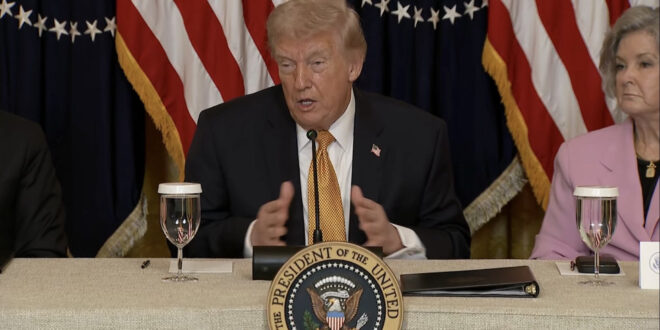
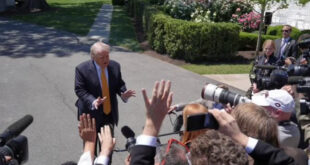
Speaking to reporters ahead of a meeting with the board of trustees at the John F. Kennedy Center for the Performing Arts, Trump said U.S. forces have struck more than 7,000 targets across Iran since the conflict began.
The president said those operations have significantly reduced Iran’s ability to launch attacks, claiming ballistic missile launches have dropped by 90% and drone strikes by 95%.
“Our powerful military campaign to end the threats posed by the Iranian regime continued in full force over the past few days,” Trump said. “They have been literally obliterated. The Air Force is gone. The Navy is gone. Many, many ships have been sunk.”
“They’re war-fighting ships, but I guess they didn’t know how to use them,” he added.
Naval losses and battlefield claims
Trump said more than 100 Iranian naval vessels have been “sunk or destroyed,” including about 30 ships capable of laying naval mines.
He also claimed Iran’s air defenses and radar systems had been largely destroyed and that key military leaders had been killed in the campaign.
The White House has not released independent confirmation of the full scope of the damage described by the president.
Push for international help in Strait of Hormuz
While saying the Strait of Hormuz — a crucial shipping route for global oil exports — is currently in “very good shape,” Trump urged other nations that rely on energy shipments through the passage to assist the United States in keeping it open.
“Numerous countries have told me they’re on the way,” Trump said, though he did not identify which governments had committed to help.
He said Marco Rubio, his secretary of state, and other administration officials would soon announce which countries plan to participate in operations to ensure access through the waterway.
The president also criticized the North Atlantic Treaty Organization, saying he doubted some allies would step in to help the United States in times of need.
“We were going to protect them, but I always said, when in need, they don’t protect us,” Trump said. “Now this is a need.”
Iran response and leadership uncertainty
Trump accused Iran of using artificial intelligence to spread disinformation about the war but said the two sides remain in communication.
“They’re negotiating, and we always talk,” he said. “I don’t know if they’re ready yet. They’re taking a pounding.”
Asked about Mojtaba Khamenei, who recently assumed leadership following the death of his father, Ali Khamenei, Trump suggested his whereabouts remain unclear.
“We don’t know … if he’s dead or not,” the president said.
Mojtaba Khamenei, 56, became Iran’s supreme leader after his father was killed in U.S. and Israeli strikes late last month, according to regional officials.
Regional escalation
Trump also said he was surprised by Iran’s retaliation following initial U.S. and Israel airstrikes, noting Tehran had launched missiles toward multiple countries in the region.
Those attacks struck targets in Qatar, Saudi Arabia, United Arab Emirates, Bahrain and Kuwait, he said.
“In the last two weeks, they weren’t supposed to go after all these other countries in the Middle East,” Trump said. “Nobody expected that. We were shocked and they fought back.”