

U.S. stocks opened lower Monday as oil prices surged amid signs that U.S.-Israeli military strikes against Iran were expanding across the Middle East, intensifying fears of potential disruptions to global petroleum supplies.
The S&P 500 fell 53 points, or 0.8%, in early trading, while the Dow Jones Industrial Average dropped 0.9% and the Nasdaq Composite slid 0.7%.
Energy markets were jolted by sharp gains in crude prices. Brent crude, the international benchmark, jumped nearly 9% to $79.31 a barrel — its highest level in more than a year. U.S. benchmark West Texas Intermediate rose 6.3% to $71.28 a barrel, according to FactSet.
Analysts warned that the escalating conflict could threaten oil shipments through the Strait of Hormuz, a critical maritime chokepoint through which roughly 20% of the world’s oil supply passes.
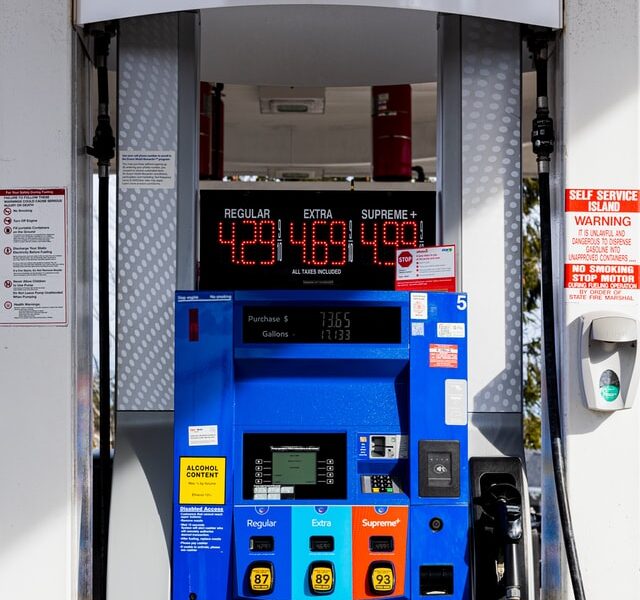
Any sustained disruption would likely push crude prices higher, lifting gasoline prices for U.S. consumers and raising costs for businesses across the economy, economists said.
“Uncertainty about oil prices may play a big role in determining broader market sentiment,” said Chris Larkin, managing director of trading and investing at E*Trade, which is owned by Morgan Stanley.
“There are more questions than answers right now,” Larkin said in an email. “A stabilizing energy picture could have a positive ripple effect, while concerns about a longer-term disruption could have the opposite.”
Why the economic impact could be limited
Some analysts believe the economic fallout from higher oil prices may be less severe than in past crises.
The U.S. “has switched from being a net importer to being a net exporter of oil,” said John Higgins, chief markets economist at Capital Economics.
As a result, stock markets may be more resilient than during the 1970s, when the 1973–74 oil embargo triggered surging inflation and a deep recession, Higgins said.
Focus on a vital choke point
In the near term, Wall Street remains focused on shipping activity through the Strait of Hormuz, which is just 21 miles wide at its narrowest point and serves as a key artery for oil and gas exports from the Persian Gulf.
The Energy Information Administration, part of the U.S. Department of Energy, estimates that millions of barrels of oil and petroleum products transit the strait daily.
Iran controls the northern coastline of the waterway, while Oman and the United Arab Emirates border its southern side. With hostilities escalating, analysts say some oil tankers appear to be delaying or halting passage through the strait.
“Oil and gas tanker traffic through the Strait of Hormuz has ground to a near halt,” analysts at Eurasia Group said in a March 1 report, citing satellite data.
Even a brief interruption of shipments lasting only a few days “would cause a significant disruption to global supply,” the firm said.
China exposure adds pressure
Iran exports roughly 1.6 million barrels of oil per day, most of it to China. Any prolonged disruption could force Beijing to seek alternative suppliers, potentially intensifying competition for global energy supplies and driving prices higher.
Markets were also weighed down by inflation data released Friday showing U.S. wholesale inflation rose 2.9% last month — far above economists’ expectations of 1.6%.
The stronger-than-expected reading could pressure the Federal Reserve to delay interest rate cuts, which typically support economic growth and asset prices but risk stoking inflation.