

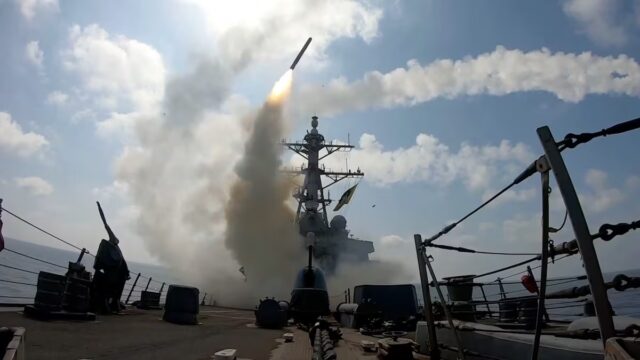
Iran’s state media confirmed Saturday that Supreme Leader Ayatollah Ali Khamenei, 86, was killed in a joint U.S.-Israeli military operation, marking a dramatic escalation in a widening regional war and the first assassination of a sitting Iranian supreme leader since the Islamic Republic was founded in 1979.
The Iranian government declared 40 days of national mourning following Khamenei’s death. The announcement came hours after President Donald Trump posted on Truth Social that Israel, with U.S. support, had killed the longtime Iranian leader during a sweeping military campaign aimed at toppling Iran’s Islamic regime.
“He was unable to avoid our Intelligence and Highly Sophisticated Tracking Systems,” Trump wrote. “Working closely with Israel, there was not a thing he, or the other leaders that have been killed along with him, could do.”
Trump said heavy bombing would continue “as long as necessary to achieve our objective of peace throughout the Middle East and, indeed, the world.”
Senior Iranian officials also reported killed
Israel’s military said multiple top Iranian security officials were killed in the operation, including Iran’s defense minister, the commander of the Islamic Revolutionary Guard Corps and the secretary of Iran’s Supreme National Security Council, described as a close adviser to Khamenei. Iranian authorities confirmed Khamenei’s death but did not immediately confirm the reported deaths of other officials.
A person briefed on the strike said that Khamenei was killed in an Israeli airstrike. The individual spoke on condition of anonymity because they were not authorized to discuss the operation publicly. Trump did not explicitly confirm whether Israel carried out the strike.
Massive air campaign strikes Tehran and beyond
Airstrikes began shortly after sunrise Saturday, with explosions reported across Tehran and other cities. Video showed thick smoke rising over the capital.
Iran’s Foreign Ministry called the attack a “gross violation” of national sovereignty, saying military and civilian targets were hit. The Iranian Red Crescent Society said more than 200 people were killed nationwide.
Iranian state media reported that one airstrike struck a girls’ primary school in southern Iran, killing at least 85 children, citing local prosecutors. Authorities said additional children remained buried under rubble. Israeli officials had not publicly commented on the report.
Capt. Tim Hawkins, a spokesperson for United States Central Command, said the U.S. was aware of reports of civilian casualties.
“We take these reports seriously and are looking into them,” Hawkins said, adding that the protection of civilians remains a priority.
Residents in Tehran described panic and chaos as communications were disrupted and security forces deployed across neighborhoods.
Iran retaliates; region on high alert
Iran launched missile and drone attacks across the region in response. Air raid sirens sounded in Israel as interception systems fired at incoming projectiles over Tel Aviv. Gulf nations including Saudi Arabia, the United Arab Emirates, Qatar, Bahrain and Kuwait reported Iranian strikes or interceptions.
Bahrain said an Iranian airstrike hit the U.S. naval base housing the United States Fifth Fleet. The UAE reported intercepting missiles and said debris killed a foreign national in Abu Dhabi. Jordan said it downed 49 drones and ballistic missiles threatening its airspace.
Israel declared a nationwide state of emergency, closed its airspace and activated civil defense protocols.
Israeli Prime Minister Benjamin Netanyahu said the goal of the campaign was to remove what he called “the existential threat posed by the terrorist regime in Iran.”
“Our joint action will create the conditions for the brave Iranian people to take their destiny into their own hands,” Netanyahu said.
Diplomatic fallout and global alarm
The strikes followed weeks of escalating tensions and failed negotiations over Iran’s nuclear program. Talks were held in Geneva days earlier, but Trump said diplomacy had failed.
The International Atomic Energy Agency has said there is no verified evidence Iran resumed uranium enrichment at levels suggesting an active weapons program.
Trump openly called for regime change, telling Iranians in a video message that once the bombing ends, they should “take over your government.”
Military analysts cautioned that air power alone may not be sufficient to topple Iran’s leadership, which has ruled for 47 years.
U.N. Secretary-General António Guterres condemned both the U.S.-Israeli strikes and Iran’s retaliation during an emergency session of the United Nations Security Council.
“We are witnessing a grave threat to international peace and security,” Guterres said. “There is no viable alternative to the peaceful settlement of international disputes.”
White House Press Secretary Karoline Leavitt said Trump spoke Saturday with leaders of Qatar, Saudi Arabia, the UAE and NATO Secretary General Mark Rutte.