Poli Alert Politics & Civics
Related Articles


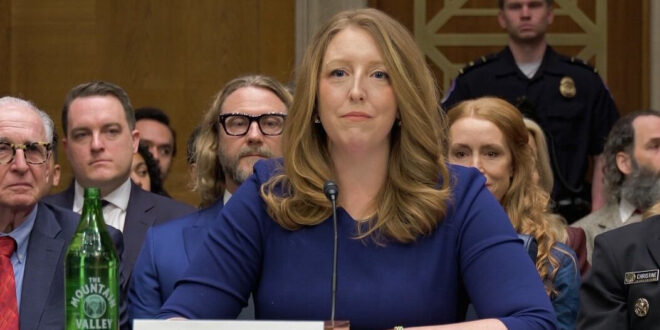
President Donald Trump’s nominee for surgeon general, Dr. Casey Means, testified before a Senate committee Wednesday, defending her wellness-focused approach to public health while avoiding direct endorsements of routine childhood vaccinations and drawing sharp criticism over her qualifications and financial ties.
Means, a physician turned wellness entrepreneur and author, appeared before the Senate Health, Education, Labor and Pensions Committee months after her confirmation hearing was delayed because of pregnancy and childbirth. During her testimony, she repeatedly praised Health Secretary Robert F. Kennedy Jr. and aligned herself with his “Make America Healthy Again” agenda, which emphasizes chronic disease, nutrition and environmental factors over pharmaceutical interventions.
Vaccine questions dominate hearing
Under questioning from committee chairman Sen. Bill Cassidy, a Republican physician, Means said she believes “vaccines save lives” but stopped short of encouraging parents to vaccinate children against measles or influenza, saying such decisions should be made through conversations between doctors and patients.
Pressed by Sen. Tim Kaine, Means eventually acknowledged that, at a population level, flu vaccines reduce the risk of injury and hospitalization — a position that contrasts with Kennedy’s past claims questioning their effectiveness.
Means took a similar approach when questioned by Sen. Bernie Sanders about the thoroughly debunked link between vaccines and autism, a theory long promoted by Kennedy and his allies.
“I do accept that evidence,” Means said, referring to the scientific consensus rejecting any connection. But she added that “science has never settled” and expressed support for Kennedy’s efforts to investigate “all environmental factors” contributing to autism. She emphasized that vaccines are “not part of my core message.”
Background fuels criticism
Means has previously raised concerns on podcasts and social media about the childhood vaccine schedule, hormonal birth control and has publicly endorsed raw milk — views that place her at odds with mainstream medical guidance.
While she defended broad access to oral contraceptives during the hearing, she emphasized the need for physician oversight and informed consent.
Her nomination has drawn significant opposition from medical and public health leaders, largely due to her lack of traditional clinical and public health experience.
“She is less qualified professionally than any other surgeon general in history,” said Dr. Georges Benjamin, CEO of the American Public Health Association.
Means graduated from Stanford Medical School but left surgical residency training before becoming board-certified. She later opened a functional medicine practice in Oregon but stopped seeing patients several years ago and does not currently hold an active medical license. She told senators she has no plans to reactivate her license if confirmed.
Business interests and ethics concerns
Means has built a national profile through her book Good Energy, podcast appearances and a wellness company, Levels, which promotes continuous glucose monitors and sells supplements and other products. Her brother and coauthor, Calley Means, has served as an adviser to Kennedy at the Department of Health and Human Services.
Democratic Sen. Chris Murphy questioned Means aggressively over a pending complaint alleging she failed to disclose financial relationships tied to products she promoted, potentially violating Federal Trade Commission rules.
“This seems systemic,” Murphy said. “In the majority of instances in which you were recommending a product, you were hiding the fact that you had a financial partnership.”
Means denied the allegations and said she would provide additional information to committee staff. She has pledged to divest from her businesses if confirmed.
Role of surgeon general
Often referred to as the nation’s top doctor, the surgeon general oversees more than 6,000 officers in the U.S. Public Health Service, including physicians, nurses and scientists working across federal agencies. The position carries significant influence over public health messaging, advisories and national health priorities within the Department of Health and Human Services.
The committee concluded the hearing after more than two hours of testimony without taking a vote on Means’ nomination.