Poli Alert Politics & Civics
Related Articles



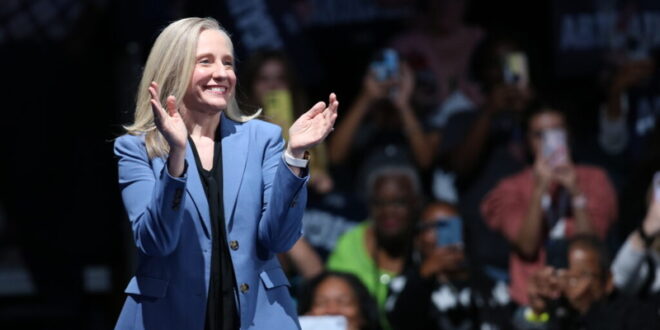
Virginia Gov. Abigail Spanberger will deliver the official Democratic response to President Donald Trump’s State of the Union address on Feb. 24, party leaders announced Thursday, handing a national spotlight to a rising figure seen as a model for Democratic success in competitive territory.
The rebuttal is among the highest-profile speaking opportunities the minority party can offer — and one that has proven a mixed blessing. While it provides a national platform, it also places the speaker in the difficult position of following a president who has just addressed a joint session of Congress with all the ceremonial advantages that entails.
In recent years, many response speeches — whether delivered from a television studio, a living room or a diner — have been quickly forgotten or remembered for awkward moments rather than political impact.
Still, the slot has occasionally foreshadowed future prominence. Four presidents — Gerald Ford, George H. W. Bush, Bill Clinton and Joe Biden — delivered State of the Union rebuttals before winning the White House. In 2013, then-Sen. Marco Rubio gave the Republican response to President Barack Obama in both English and Spanish.
Focus on costs, stability and leadership
“We are at a defining moment in our nation’s history,” Spanberger said in a statement Thursday. “Virginians and Americans across the country are contending with rising costs, chaos in their communities, and a real fear of what each day might bring. Next week, I look forward to laying out what these Americans expect and deserve — leaders who are working hard to deliver for them.”
Spanberger’s selection underscores Democrats’ emphasis on affordability and day-to-day economic concerns as they look ahead to the 2026 midterm elections, when control of Congress will again be at stake.
A political rise shaped by opposition to Trump
Spanberger’s political ascent has closely tracked Democratic resistance to Trump. In 2018, she narrowly won a House seat in a Virginia district long held by Republicans, part of the wave that returned Democrats to the House majority that year.
During her tenure, she emerged as one of a group of national-security-focused moderates whose frustration with Trump’s decision to withhold military aid to Ukraine helped push then-Speaker Nancy Pelosi toward impeachment proceedings in 2019.
Midway through her third House term, Spanberger launched a campaign for governor, centering her message on affordability and practical governance. In 2025, she defeated Republican Winsome Earle-Sears by nearly 16 percentage points — a margin that far exceeded the Democratic presidential performance in Virginia the year before and caught national strategists’ attention.
Jeffries’ pick signals midterm strategy
The choice of response speaker rests with the party’s top congressional leaders — House Minority Leader Hakeem Jeffries and Senate Minority Leader Chuck Schumer — who alternate years selecting the main rebuttal. This year, the responsibility fell to Jeffries.
In a statement, Jeffries said Spanberger “stands in stark contrast to Donald Trump, who will lie, deflect and blame everyone but himself for his failed presidency.”
Jeffries and Schumer also announced that Sen. Alex Padilla will deliver the Spanish-language Democratic response.
In selecting Spanberger, Jeffries bypassed other recent Democratic winners, including New York Mayor Zohran Mamdani, whose left-leaning economic message has energized progressives, and New Jersey Gov. Mikie Sherrill, a close Spanberger ally who also flipped a House seat in 2018 before winning statewide office.
A person familiar with the decision said Spanberger’s ability to flip a Republican-held district and later the Virginia governor’s mansion — while relentlessly emphasizing affordability — offers a blueprint Democrats hope to replicate in battleground races next year.
Looking toward 2026
With polling showing Trump under pressure on issues that have traditionally been strengths, including the economy and immigration, Democrats are increasingly pointing to campaigns like Spanberger’s as evidence that disciplined messaging and focus on everyday costs can still resonate with swing voters.
Her response on Feb. 24 will give voters their clearest look yet at how Democrats plan to frame that argument on the national stage.