Poli Alert Politics & Civics
Related Articles

President Donald Trump’s top economic adviser on Wednesday urged punishment for Federal Reserve economists after a new study concluded that U.S. companies and consumers are paying for nearly all of the tariffs imposed by the White House last year.
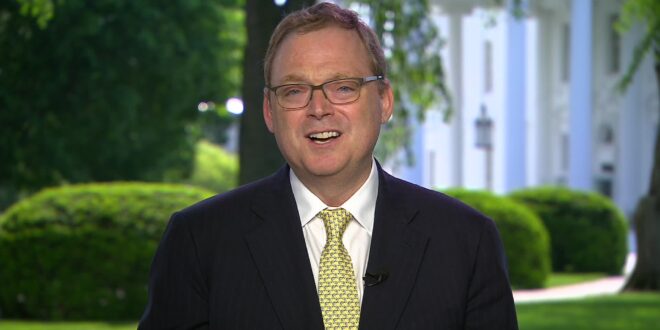
“The paper is an embarrassment,” Kevin Hassett, director of the White House’s National Economic Council, said in an interview on CNBC. “It’s the worst paper I’ve ever seen in the history of the Federal Reserve system. The people associated with this paper should presumably be disciplined.”
Hassett’s remarks mark the latest escalation in the Trump administration’s increasingly public attacks on the Federal Reserve, which has traditionally operated independently from day-to-day political pressure. They also underscore the White House’s sensitivity to public concern about rising prices for groceries, housing and big-ticket consumer goods, as surveys continue to show widespread voter dissatisfaction with the economy.
What the Fed Study Found
The research, released last week by the Federal Reserve Bank of New York, found that American businesses and consumers are paying nearly 90% of the cost of tariffs imposed by the Trump administration.
According to the study, average U.S. tariffs rose from about 2.6% at the start of last year to roughly 13% by the end of the year. Because U.S. importers pay tariffs directly to the Treasury, foreign exporters would need to significantly cut their prices to absorb the cost.
Instead, New York Fed economists found that overseas suppliers lowered prices only marginally — far less than the size of the new duties — leaving U.S. importers, retailers and ultimately consumers to shoulder most of the burden.
Findings Backed by Other Research
The New York Fed’s conclusions align with a growing body of research. Similar findings have come from economists at Harvard University and the University of Chicago, the Kiel Institut, a German economic think tank, and a recent report by the nonpartisan Congressional Budget Office.
Despite those findings, Trump administration officials have repeatedly argued that foreign countries — not Americans — are paying the tariffs.
This is not the first time the White House has lashed out at economists who reached the opposite conclusion. Last August, an economist at Goldman Sachs projected that U.S. consumers would increasingly bear the cost of tariffs over time. Trump responded publicly by calling on Goldman Sachs CEO David Solomon to fire the economist.
Prices, Profits and Tariff Revenue
Overall inflation has risen less than many economists initially feared, partly because Trump has delayed, reduced, rolled back or granted exemptions for several tariffs. Still, prices for many goods — including furniture, appliances and tools — have climbed in the year since the duties were imposed.
Major U.S. manufacturers have acknowledged the financial hit. General Motors said last fall it expects to pay between $3.5 billion and $4.5 billion in tariffs in 2025, while Ford reported paying about $800 million in tariff costs in just the second quarter.
At the same time, tariff collections have surged. The federal government has taken in nearly $100 billion in tariff revenue since October — more than it collected during the entire 2024 budget year — highlighting the scale of the levies even as debate continues over who ultimately pays the price.