Poli Alert Politics & Civics
Related Articles


The NAACP and several allied organizations are asking a federal judge to restrict how the FBI can use voter information seized from a Fulton County elections warehouse, arguing the search threatens Georgians’ privacy and voting rights.
In a motion filed late Sunday, the groups said the Jan. 28 seizure of ballots and other election records from an elections hub just outside Atlanta “breached” the state’s promise to safeguard residents’ sensitive personal information and “infringed constitutional protections of privacy.”
The filing asks the court to impose “reasonable limits” on the government’s use of the seized data and to prohibit its use for purposes beyond the criminal investigation cited in the search warrant affidavit — including voter roll maintenance, election administration or immigration enforcement.
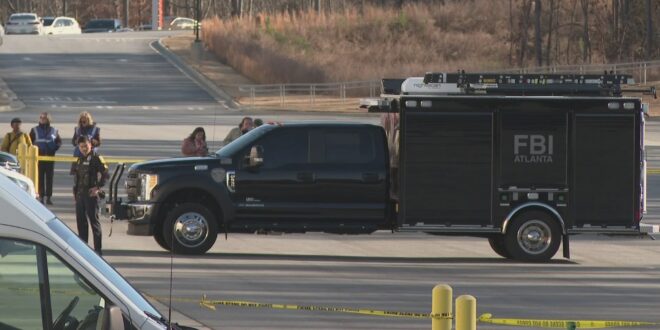
FBI agents executed a search warrant at the Fulton County elections hub seeking records related to the 2020 election. According to court filings, agents sought all ballots, tabulator tapes from vote-counting scanners, electronic ballot images created during counting and recounting, and all voter rolls.
Fulton County, Georgia’s most populous county and a Democratic stronghold, has separately filed a motion seeking the return of the seized materials.
President Donald Trump has repeatedly asserted, without evidence, that widespread voter fraud in Fulton County cost him Georgia in the 2020 presidential election.
An FBI affidavit submitted to obtain the warrant states the criminal investigation began with a referral from Kurt Olsen, who advised Trump during his efforts to overturn his 2020 loss and now serves as Trump’s “director of election security and integrity.”
The motion was filed by the Lawyers’ Committee for Civil Rights Under Law on behalf of the NAACP, its Georgia and Atlanta branches, and the Georgia Coalition for the People’s Agenda.
The groups argue that Georgia residents entrusted the state with “sensitive personal information” when registering to vote and that federal seizure of those records risks violating constitutional privacy protections and chilling participation in future elections.
They are asking the judge to require the government to:
-
Disclose a detailed inventory of all documents and records seized.
-
Identify anyone outside the criminal investigation who has accessed the materials.
-
Reveal whether the records have been copied.
-
Detail steps taken to secure the data.
The filing emphasizes that the Justice Department has recently sought unredacted voter registration rolls from multiple states, heightening concerns about how the Fulton County data might be used.
“These repeated efforts to access 2020 election records, including by the entity that now has custody of them, heighten concerns about the privacy and security of sensitive voter data and exacerbate the chill on voting rights,” the motion states.
The U.S. Department of Justice did not immediately respond Monday to a request for comment on the motion.
The Justice Department has sued at least 23 states and the District of Columbia seeking access to detailed voter information. The department has said the requests are part of efforts to ensure election security and maintain accurate voter rolls.
Democratic officials and voting rights advocates have expressed concern that the data could be used for other purposes, including immigration enforcement or broader federal investigations. Federal courts in several states have rejected Justice Department attempts to compel disclosure of certain voter records.
The dispute reflects ongoing national tensions over election administration following the 2020 presidential contest. Fulton County has been a focal point of scrutiny and political controversy because of its size and Democratic voting patterns.
Voting rights groups say aggressive federal efforts to obtain detailed voter data risk undermining public confidence in election systems and deterring eligible voters from registering or participating.
Supporters of the Justice Department’s actions argue that federal oversight is necessary to ensure uniform compliance with election laws and to investigate potential wrongdoing.
A federal judge will determine whether to impose limits on the FBI’s use of the seized materials and whether additional disclosures are required.
If the court grants the motion, it could restrict how the Justice Department handles sensitive voter data while the criminal investigation proceeds. If denied, civil rights groups may pursue further legal action.
For now, the case adds another chapter to the legal and political battles surrounding the 2020 election and the scope of federal authority over state-run voting systems.