Poli Alert Politics & Civics
Related Articles

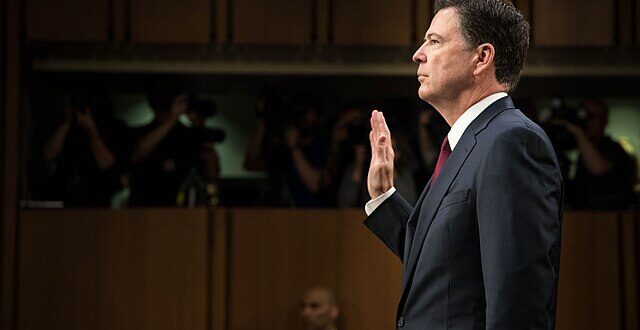
A federal judge on Saturday temporarily barred the Justice Department from accessing a set of computer files central to its effort to pursue a new indictment against former FBI Director James Comey, marking a significant procedural setback for prosecutors as they weigh whether to revive the case.
U.S. District Judge Colleen Kollar-Kotelly issued a late-night temporary restraining order preventing prosecutors from reviewing or disseminating communications between Comey and his longtime friend, Columbia University law professor Daniel Richman. Those messages were cited by the government earlier this year when it charged Comey with lying to Congress about whether he directed an associate to anonymously discuss FBI matters with the press.
The earlier case collapsed last month after a separate federal judge ruled that the prosecutor who brought the charges — Lindsey Halligan, appointed by the Trump administration — had been unlawfully installed. That dismissal left open the possibility of a new indictment, a scenario President Donald Trump has publicly encouraged. Comey has pleaded not guilty and accused the Justice Department of pursuing a “vindictive prosecution.”
Judge says Richman faced ‘irreparable harm’
Richman’s attorneys asked the court to intervene after learning that the Justice Department had retained a full image of his computer from warrants executed in 2019 and 2020 during an ultimately abandoned leak investigation. In their filings, they argued prosecutors exceeded the warrants’ scope, kept data they were required to destroy or return, and conducted new searches without judicial authorization.
Kollar-Kotelly agreed, writing that Richman had shown he faced “irreparable harm” from the continued retention of his seized materials. She instructed the government not to “access,” “share,” or “disclose” the files until at least Friday or further court order, and required DOJ to certify compliance by Monday afternoon.
The Justice Department declined to comment on the order or its implications for any renewed effort to indict Comey.
Prospects for a new indictment remain uncertain
Even if the government were allowed to rely on the Richman communications, legal hurdles remain. Comey’s attorneys argue the statute of limitations for any false-statements charge tied to his Sept. 30, 2020, congressional testimony expired after five years. Prosecutors have not responded publicly to that claim, and legal experts say any attempt to toll the deadline could be contested.
The restraining order adds another complication for federal officials who have recently struggled to refile cases brought by Halligan. Last week, a New York grand jury refused to issue a new indictment against state Attorney General Letitia James, another Trump critic whose earlier case was dismissed on the same appointment grounds.
The Justice Department has until Monday to detail how it is isolating Richman’s files to comply with the order, which could shape the government’s next steps in the Comey matter.