

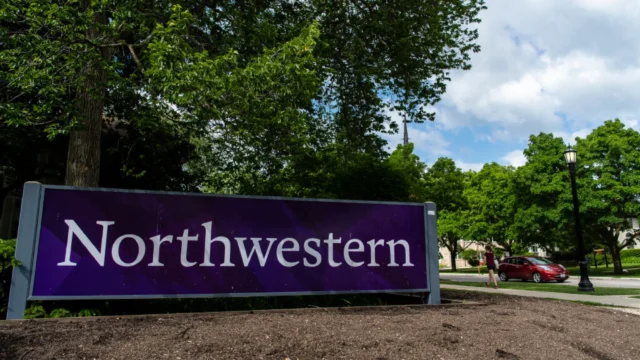
Northwestern University has agreed to pay $75 million to the federal government in a settlement with the Trump administration that ends months of escalating investigations and restores access to hundreds of millions of dollars in frozen research grants.
The agreement, announced Friday night, comes after the administration suspended approximately $790 million in federal funding earlier this year. Officials accused the university of failing to adequately address antisemitism on campus — a rationale critics said the administration wielded as part of a larger effort to push policy changes at elite universities.
The freeze contributed to staff layoffs and heightened turmoil on campus, culminating in the September resignation of university president Michael Schill. Interim president Henry Bienen said negotiations with the federal government were tense and, at times, threatened to spill into core areas of academic governance.
“I would not have signed this agreement without provisions ensuring we retain control over hiring, admissions and curriculum,” Bienen said in a statement. “Those are foundational to the mission of any university.”
Under the deal, Northwestern will pay the U.S. Treasury in installments over three years. The university must also revoke the 2024 Deering Meadow agreement it reached with pro-Palestinian protesters to bring an end to a tent encampment on campus — a pact that had drawn sustained criticism from Republican elected officials and conservative activists.
The settlement further requires Northwestern to certify continued compliance with federal anti-discrimination statutes; develop new training materials intended to “socialize international students” to campus norms around free debate; and strengthen its adherence to Title IX provisions, including maintaining single-sex housing and women-only athletic, locker room and showering facilities upon request.
Education Secretary Linda McMahon said the settlement will “ensure stronger protections against harassment and discrimination” on college campuses. She praised Northwestern’s leadership for accepting what she described as meaningful reforms.
The agreement makes Northwestern one of several elite universities subjected to sweeping federal actions in recent months. Columbia University agreed in July to pay $200 million in its own settlement, the largest such payout to date. Brown University and Cornell University also reached deals to restore federal funding following federal probes of campus antisemitism.
Harvard University — the administration’s most frequent target — remains locked in negotiations even after a federal judge ordered the government to restore its funding in September. In that ruling, the court said the Trump administration had “used antisemitism as a smokescreen” to justify withholding the money.
Higher education leaders have accused the administration of attempting to reshape campus culture through the strategic use of federal research dollars, long considered a neutral cornerstone of academic inquiry. This fall, the White House began offering preferential treatment in funding decisions for universities willing to adopt policies aligned with administration priorities.
Several institutions publicly rejected the proposal, arguing it risked undermining academic freedom and injecting partisan considerations into financial decisions that support scientific research across disciplines.
Northwestern officials said the settlement allows the school to resume critical research projects that had been stalled for months. Bienen called the agreement “deeply imperfect” but necessary to restore stability.
“We can now move forward,” he said, “even if the process that brought us here raises troubling questions about the future of the relationship between universities and the federal government.”