

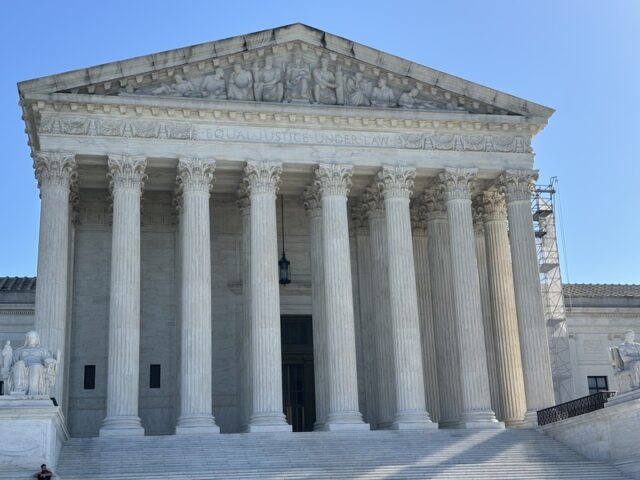
Legal standing is the right to bring a lawsuit, and in federal court it means the person suing must show they were personally harmed by what they are challenging and that a court can do something about it. If a person does not have standing, a judge will throw out the case without ever deciding whether the law or action being challenged is legal.
The idea comes from Article III of the U.S. Constitution, which gives federal courts power over “cases” and “controversies.” The Supreme Court has read those words to mean federal judges can only settle real disputes between parties who have something at stake. Judges cannot give opinions on questions just because someone is curious or upset, and they cannot act as general watchdogs over the government.
Over time, the Supreme Court laid out three tests a person must pass to have legal standing in federal court. The clearest statement of those tests came in a 1992 case about protecting endangered species overseas.
The political news that affects your wallet, your rights and your vote, broken down in plain language. Free in your inbox.
First, there must be an injury. The harm has to be concrete and personal, such as losing money, losing a job, being denied a benefit or having property damaged. It must be real or about to happen, not a guess about something that might happen someday. Being angry about a policy, or believing the government is breaking the law, is not enough on its own.
Second, the injury has to be caused by the person or agency being sued. Lawyers call this traceability. If the harm really comes from someone who is not part of the lawsuit, the claim usually fails.
Third, a court ruling has to be able to fix the problem, which lawyers call redressability. If a judge’s order would not actually stop the harm or make up for it, there is nothing for the court to do.
The person bringing the case has to prove all three. Standing can also be lost along the way. If the policy being challenged ends, or the person’s situation changes so the harm goes away, a court may dismiss the case.
There are some well known limits on legal standing. People generally cannot sue the federal government just because they pay taxes and dislike how the money is spent, because that harm is shared by everyone. Groups such as unions or civil rights organizations can sometimes sue on behalf of their members, but usually at least one member must have standing on their own. States can sue too, but they also have to show a harm to the state itself, such as lost money.
A real example involves student loans. On June 30, 2023, the Supreme Court decided two challenges to the Biden administration’s plan to cancel up to $20,000 in federal student debt per borrower. In one case, brought by two borrowers who did not qualify for the full relief, the justices ruled unanimously that the borrowers did not have standing, because they could not show that striking down the plan would get them any more help. In the other case, brought by six states, the Court found that Missouri had standing because MOHELA, a loan company the state created, would lose fees if the loans were canceled. The Court then struck down the plan by a 6 to 3 vote. Same program, same day, and one challenge was dismissed at the door while the other decided the policy’s fate.
Standing rules in state courts can be different. Each state sets its own rules, and some state courts allow broader lawsuits than federal courts do.
Legal standing matters in everyday life because it decides who gets to walk into court. It is the reason many headline lawsuits against new laws or executive orders are thrown out early, and the reason advocacy groups spend time finding people who are directly affected to put their names on a case. It also means a law can stay on the books for years, even if many people believe it is unconstitutional, until someone with a direct, personal injury challenges it. For anyone who wants to challenge a government decision about their job, benefits, housing or loans, the first thing a judge will ask is not whether they are right, but whether they were harmed.