A veto override is a vote by lawmakers that turns a bill into law even after a president or governor has rejected it, and it usually takes far more than a simple majority to pull off.
Here is how it works at the federal level. Under Article I, Section 7 of the Constitution, every bill that passes the House and the Senate goes to the president. The president can sign it, and it becomes law. The president can also veto it, which means sending it back to the chamber where it started with a written list of objections. A veto is the executive’s power to say no to a bill that the legislature has approved.
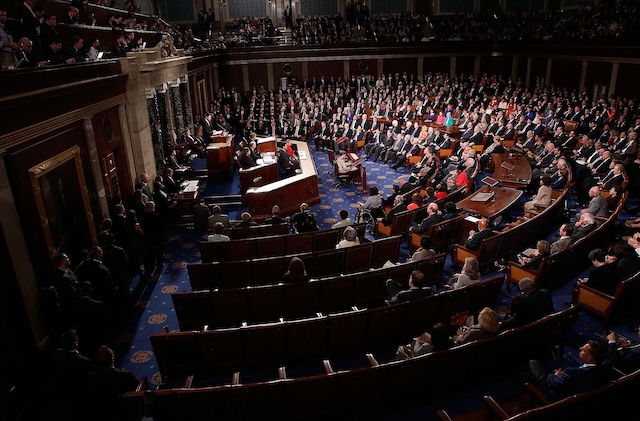
Congress does not have to accept that answer. If two thirds of the members present and voting in the House and two thirds in the Senate vote to pass the bill again, the veto is overridden and the bill becomes law without the president’s signature. Both chambers have to reach that bar. If either one falls short, the veto stands and the bill is dead.
The political news that affects your wallet, your rights and your vote, broken down in plain language. Free in your inbox.
The two thirds rule is the reason a veto override is rare. A party that controls Congress by a few seats cannot override a veto on its own; it needs a large share of the other party to join. Senate historical records count more than 2,500 presidential vetoes since George Washington, and Congress has overridden only a little over 100 of them.
The president has a few other options. If Congress is in session and the president does nothing for 10 days, not counting Sundays, the bill becomes law without a signature. If Congress adjourns during those 10 days and the president does not sign the bill, it dies. That is called a pocket veto, and Congress cannot override it because there is no session to send the bill back to. The president also cannot veto only part of a bill. Congress gave presidents a line item veto in 1996, but the Supreme Court struck it down in 1998, ruling that the Constitution requires the president to accept or reject a bill as a whole.
One real example shows how an override plays out. In December 2020, Donald Trump vetoed the National Defense Authorization Act, the yearly bill that sets military policy and pay. The House voted to override it, and on January 1, 2021, the Senate followed. It was the only veto override of Trump’s first term, and it happened because large numbers of members from both parties had already voted for the bill.
States have their own versions of this system. Every governor has some form of veto power, and the vote needed to override it is set by each state’s constitution. Many states use two thirds, like Congress. Others, including North Carolina, Maryland and Illinois, use three fifths. A handful let lawmakers override with a simple majority, which makes a governor’s veto far easier to overturn. North Carolina was the last state to give its governor a veto at all, after voters approved it in 1996.
Many governors also have a power the president does not, called the line item veto, which lets them strike specific spending items from a budget bill while signing the rest. That gives governors more control over state budgets than presidents have over federal ones.
Elections can change the picture. When a party is about to lose seats after an election, it may rush to hold override votes during a lame duck session, the period between the election and the day new members take office. Once the new members are sworn in, the math changes, and bills that were not overridden in time are usually gone for good.
The veto override affects everyday life because it decides which laws actually reach the books. A governor’s veto can stop a bill on voting rules, gun permits, taxes or school funding, and an override can bring it back. Knowing how many votes each side has in the state legislature tells you a lot about whether a governor’s no is the final word. Each state legislature’s website lists bills that have been vetoed and whether lawmakers have scheduled an override vote.