

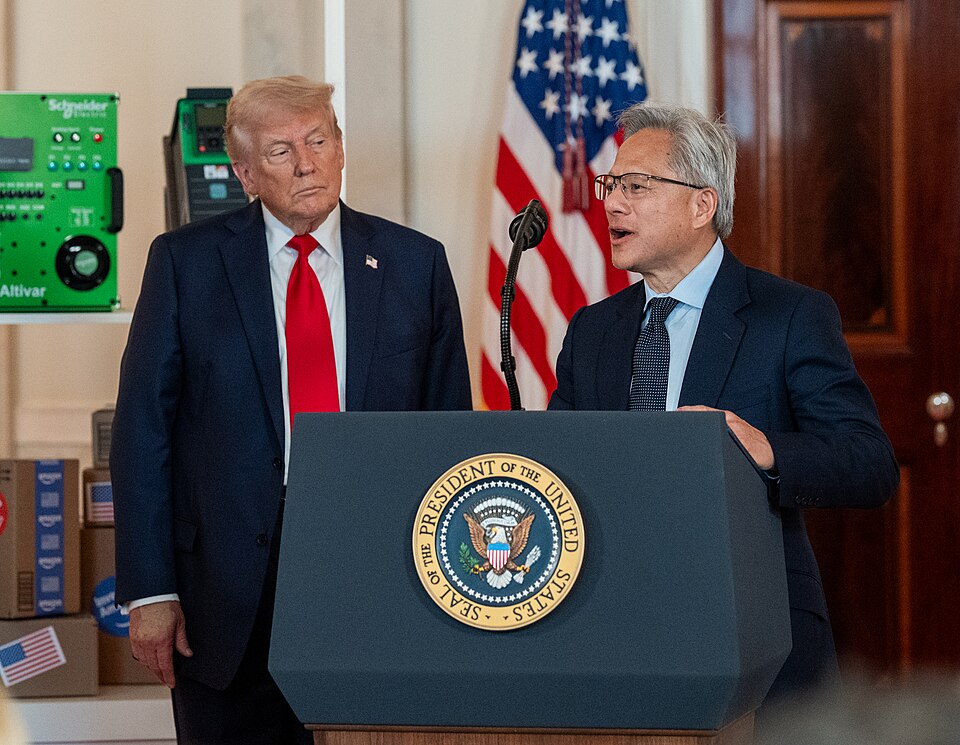
Nvidia has reinstated Jensen Huang as chief executive officer following consultations with senior U.S. government officials over national security concerns tied to allegations surrounding his personal relationships.
The decision, announced Monday, November 23, reverses Huang’s November 11 resignation and returns one of the technology industry’s most influential executives to the leadership of the world’s dominant artificial intelligence chipmaker.
According to Nvidia, its board of directors unanimously approved Huang’s reinstatement as CEO, president and board member, effective immediately.
The political news that affects your wallet, your rights and your vote, broken down in plain language. Free in your inbox.
The move comes after allegations involving a woman suspected by U.S. intelligence officials of having connections to Chinese intelligence. Those suspicions have not been publicly established as fact, and no publicly verified evidence has been presented showing that Huang disclosed classified information or Nvidia trade secrets.
Nvidia said its directors consulted senior federal officials before determining that Huang’s return would not pose a national security risk. The company has not publicly detailed those discussions or identified every official involved.
The reinstatement raises questions about how Nvidia evaluated the allegations, what assurances federal officials provided and whether additional oversight of the company’s operations could follow.
Nvidia occupies a critical position in the global competition over artificial intelligence. Its advanced processors power systems used by major technology companies, research institutions and government agencies. The United States has also imposed restrictions on exports of certain advanced semiconductor technologies to China, citing concerns that those products could strengthen Beijing’s military and intelligence capabilities.
Huang’s leadership has been central to Nvidia’s growth into one of the world’s most valuable companies. His return places him back in charge as the company navigates U.S. export controls, competition from Chinese technology firms and increasing scrutiny of the national security implications of artificial intelligence.
The controversy also comes as Donald Trump’s administration faces ongoing decisions about semiconductor exports, technology restrictions and the relationship between major American corporations and China.
Although Nvidia says it consulted federal officials, that statement does not establish that the Trump administration formally approved Huang’s reinstatement or cleared him of any wrongdoing.
For investors, Nvidia employees and companies that depend on its technology, the leadership reversal restores an experienced executive while leaving questions about the original allegations unresolved.
The next developments will depend on whether Nvidia releases additional information about its internal review, whether federal agencies publicly address their consultations with the company and whether any congressional oversight emerges.
Nvidia also announced additional safeguards as Huang returns. The company has established a National Security and Export Control Committee made up entirely of independent directors. It is also recruiting a chief compliance officer to oversee companywide compliance procedures.
The board’s independent investigation into the reported foreign intelligence effort will continue, with Huang expected to cooperate. Nvidia also said it would continue cooperating with government investigations and inquiries.
The company’s announcement does not identify the government officials who provided input or disclose their findings.