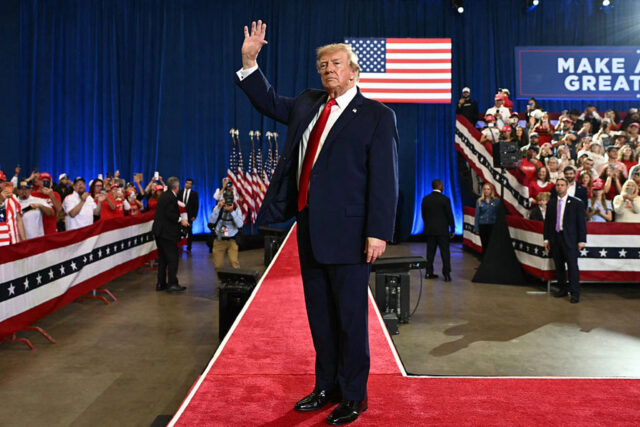
The cancellations affect a Saturday rally in Salina, Kansas, and a Sunday event in Dubuque, Iowa. The decision comes as Republicans work to maintain their congressional majorities and defend key races across the country.
Trump said he did not believe he needed to travel to Kansas because Republican Sen. Roger Marshall was “doing very well.” The White House has said Trump will participate in more than 20 virtual campaign events, commonly called tele-rallies, before Election Day.
The change means voters in Kansas and Iowa will not see the planned in-person appearances, although Trump is expected to continue campaigning remotely.
The political news that affects your wallet, your rights and your vote, broken down in plain language. Free in your inbox.
The cancellations follow a week of campaign activity in which Trump has been making appearances and urging Republican voters to turn out. His decision to replace the two stops with virtual events changes how he will campaign in those states during the final days before voting.
A tele-rally allows a candidate to address voters remotely, often through a telephone connection or livestream. The format gives campaigns a way to reach supporters in multiple locations without traveling to each state.
The cancellations also drew attention because the two states are part of the Republican Party’s broader effort to protect its congressional standing. Kansas and Iowa have Republican senators facing voters in the 2026 election cycle, making turnout and campaign visibility important parts of the final push.
Trump has not publicly identified a single reason for canceling both appearances. The White House has pointed to the virtual campaign schedule, while Trump specifically cited Marshall’s standing when discussing the Kansas event. There is no verified evidence that a health issue prompted the cancellations.
The shift leaves Trump’s campaign schedule focused on remote outreach as candidates across the country make their final appeals before voters head to the polls on November 3.