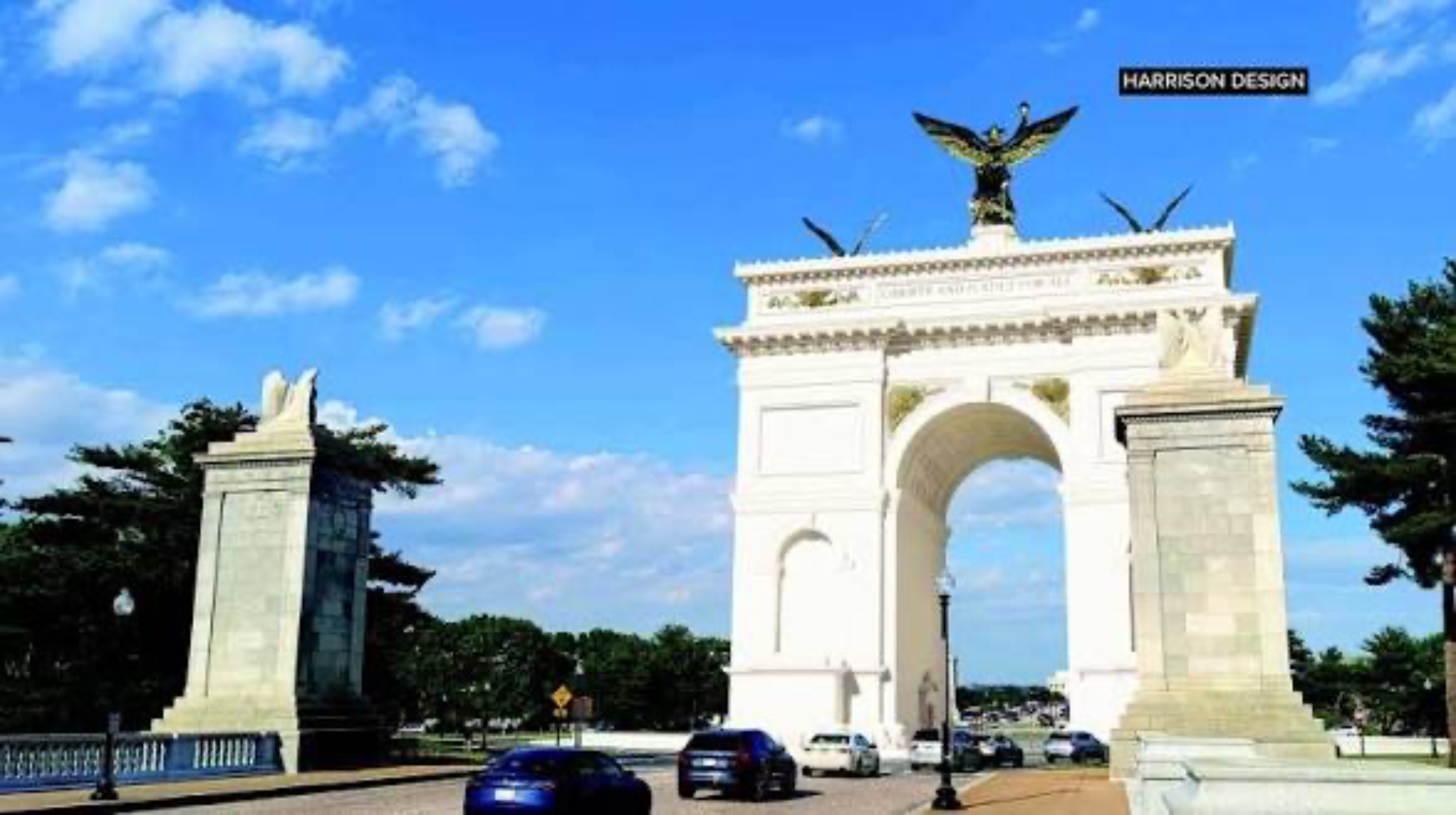
Washington, DC and Virginia sued the Trump administration on Saturday to stop construction of the Trump triumphal arch, the 250 foot monument planned for the edge of Arlington National Cemetery. The lawsuit was filed in federal court against the National Park Service and the Interior Department. It calls the project “flagrantly unlawful” and asks a judge to halt it before crews can break ground.
The clock is short. The Justice Department told a federal judge last week that the National Capital Planning Commission could give the arch final approval on November 5. That commission is the federal agency that reviews major building projects in the capital region. According to the administration’s filing, construction could start that same day, two days after the midterm elections.
The core of the case is Congress. DC and Virginia argue that Trump never got approval from Congress to build the arch, and that a monument this large on federal land requires it. The lawsuit also accuses the agencies of rushing to break ground while making only token efforts to follow the review rules for projects like this one.
The political news that affects your wallet, your rights and your vote, broken down in plain language. Free in your inbox.
The suit also challenges the arch’s height. DC law generally bars buildings taller than 130 feet along a business street or avenue. The Trump triumphal arch would reach 250 feet, nearly double that limit. The main structure is about 160 feet tall, and a gold winged figure and two eagles on top bring it to its full height.
This lawsuit differs from earlier challenges because of a legal concept called standing. Standing means a person or group must show they will actually be harmed before a court will hear their case. The Trump administration has used that argument to defeat challenges to its building projects. DC and Virginia say they have “indisputable standing” because the arch would directly affect their region. They point to the skyline, the airspace above it, and the historic view that runs from the Lincoln Memorial across the Potomac River to Arlington.
The two jurisdictions are also trying to head off a fight they have seen before. The lawsuit predicts that once construction starts, the administration will argue that stopping it would harm the federal government, create security risks and undo a situation the administration created on its own. Filing now, before any digging begins, is meant to take that argument off the table.
DC Attorney General Brian Schwalb said the project would cause “serious, immediate and irreparable harm to the District and its residents.” Virginia Attorney General Jay Jones called it “Trump’s illegal vanity project.” He said it would disrespect Arlington National Cemetery and the “extraordinary sacrifices it represents.” Both men are Democrats.
Until now, DC leaders had not sued over any of Trump’s construction projects in the city, including the White House ballroom and the changes to the East Potomac golf course.
Trump has said the arch will mark the nation’s 250th birthday. “I’d like it to be the biggest one of all,” he told reporters in February. In September, he announced it would become what he called a “Military Complex/Triumphal Arch” that would house drones, snipers and ammunition. The final plans submitted to the city did not include the military complex. White House spokesperson Davis Ingle has called the arch “one of the most iconic landmarks not only in Washington, D.C., but throughout the world.” The Interior Department, which is managing the project, and the White House did not immediately respond to questions about the new lawsuit.
The Trump triumphal arch now faces three separate legal challenges. Arlington County filed its own lawsuit earlier this month and became the first government body to take the administration to court over the arch. The first case came in February. Three Vietnam War veterans, Michael Lemmon, Shaun Byrnes and Jon Gundersen, sued alongside a retired architectural historian, represented by the watchdog group Public Citizen. They argue the arch lacks congressional approval and would block views of the cemetery where hundreds of thousands of service members are buried.
That case had a hearing on Friday, and it went badly for the administration. US District Judge Tanya Chutkan questioned the security justification and asked how a tourist attraction could help protect Trump. Assistant Attorney General Robert Stander called the arch a high profile project. He argued that delays would harm the government and that the court should wait for final agency action, which could come November 5, the same day construction could begin. Byrnes testified that the arch would change his relationship with the cemetery itself. Chutkan signaled she may block the project.
The public is not on board either. An Ipsos survey in April found that 52 percent of Americans oppose the arch and just 21 percent support it.