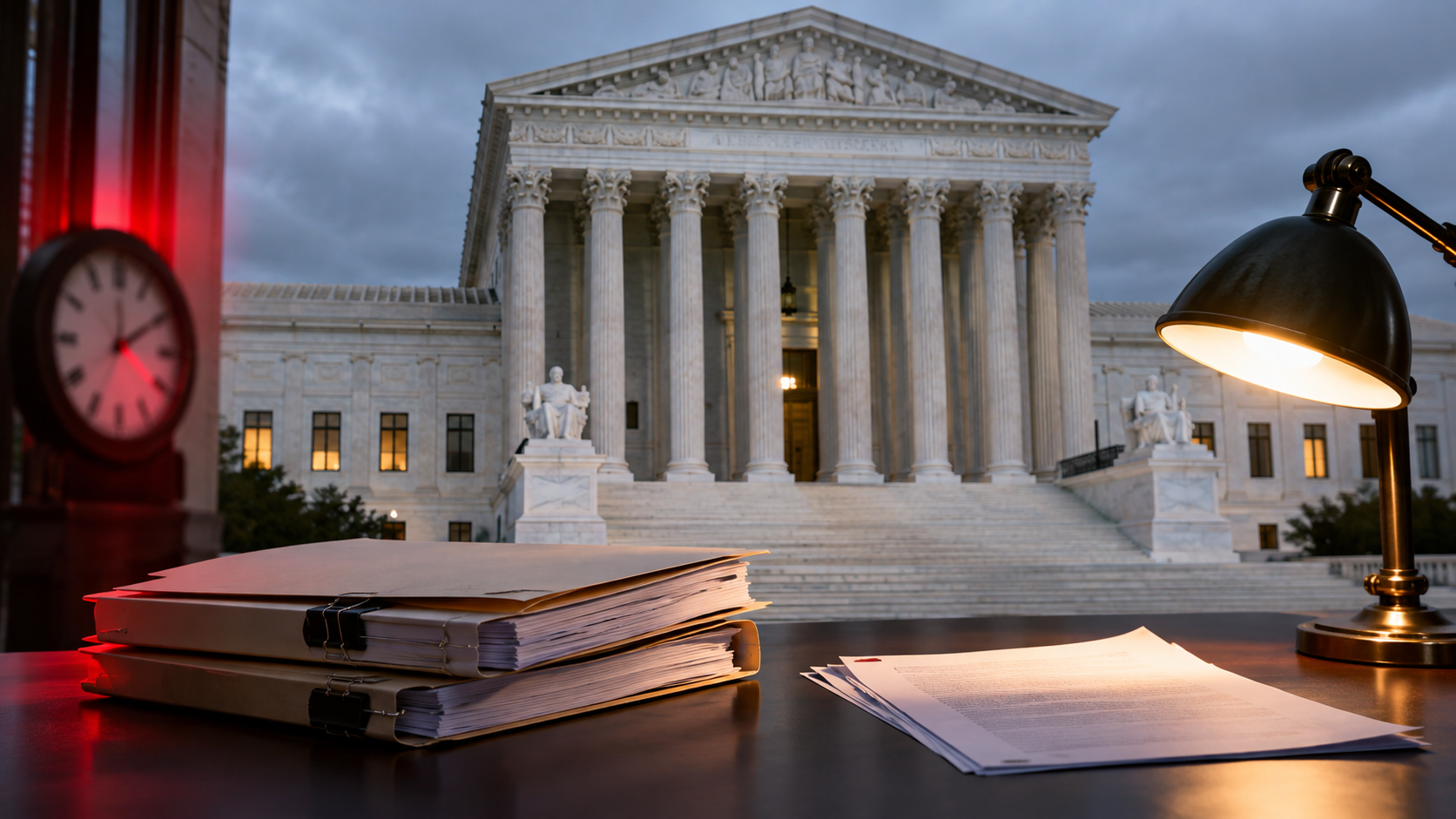
The Supreme Court emergency docket is the set of urgent requests the justices decide quickly, often within days, without the full written arguments, hearing and signed opinion that come with a regular case.
Most cases reach the Supreme Court through a petition asking the justices to review a lower court’s decision. The Court agrees to hear only a small share of them, and it takes four of the nine justices to say yes. After that come written briefs from both sides, an oral argument in the courtroom and a signed opinion explaining the decision, usually months later.
Some problems cannot wait that long. If a lower court order will cause harm before the case is finished, such as an election starting or a law taking effect, a side can file an emergency application. It asks the Court to pause a lower court ruling, which is called a stay, or to issue an injunction, a court order that requires someone to take or stop an action, while the case continues.
The political news that affects your wallet, your rights and your vote, broken down in plain language. Free in your inbox.
An emergency application goes first to the justice assigned to oversee the region, known as a circuit, where the case came from. That justice can act alone on some requests, but on major ones the application is usually sent to the full Court. To get what it asks for, the side making the request needs the support of at least five of the nine justices. The Court may ask the other side to respond within days, or it can rule immediately without hearing from them.
The justices usually look at three questions. How likely is the side asking for help to win the case in the end? Would the harm be impossible to undo if the Court waits? And who would be hurt by granting or refusing the request? The answers are weighed together, and the Court does not have to explain how it weighed them.
That is why many emergency orders are strikingly short. An order can be a single unsigned line with no reasoning, and individual justices may add a written dissent, which is a statement explaining why they disagree. Critics of the practice have given it a nickname, the shadow docket, because decisions with large consequences can arrive with little explanation. Justices themselves have disagreed in public about how much explanation these orders should carry.
A denial on the emergency docket does not mean the Court has decided who is right. It means the side asking did not persuade at least five justices to act right now. The underlying lawsuit continues in the lower courts, and the lower court ruling that was being challenged stays in place.
A recent example came on Monday, November 2, 2026, when the Supreme Court rejected an emergency request from the Trump administration that would have required California to set aside about 20,000 mail ballots, CBS News reported. The order was one unsigned line with no noted dissents. Days earlier, on October 22, the Court used the emergency docket to let New Hampshire enforce limits on student IDs for voting while an appeal continues, according to the Court’s own emergency docket.
For everyday life, the emergency docket often decides what rules are actually in effect right now. It can determine whether a law applies to you this month, whether a government program keeps running while a lawsuit plays out, or whether certain ballots are counted in an election. When you see a headline about the Supreme Court, check whether it describes an emergency order or a full opinion, and whether the case is still going. An emergency order tells you what happens in the meantime, while the final answer can still come later.