


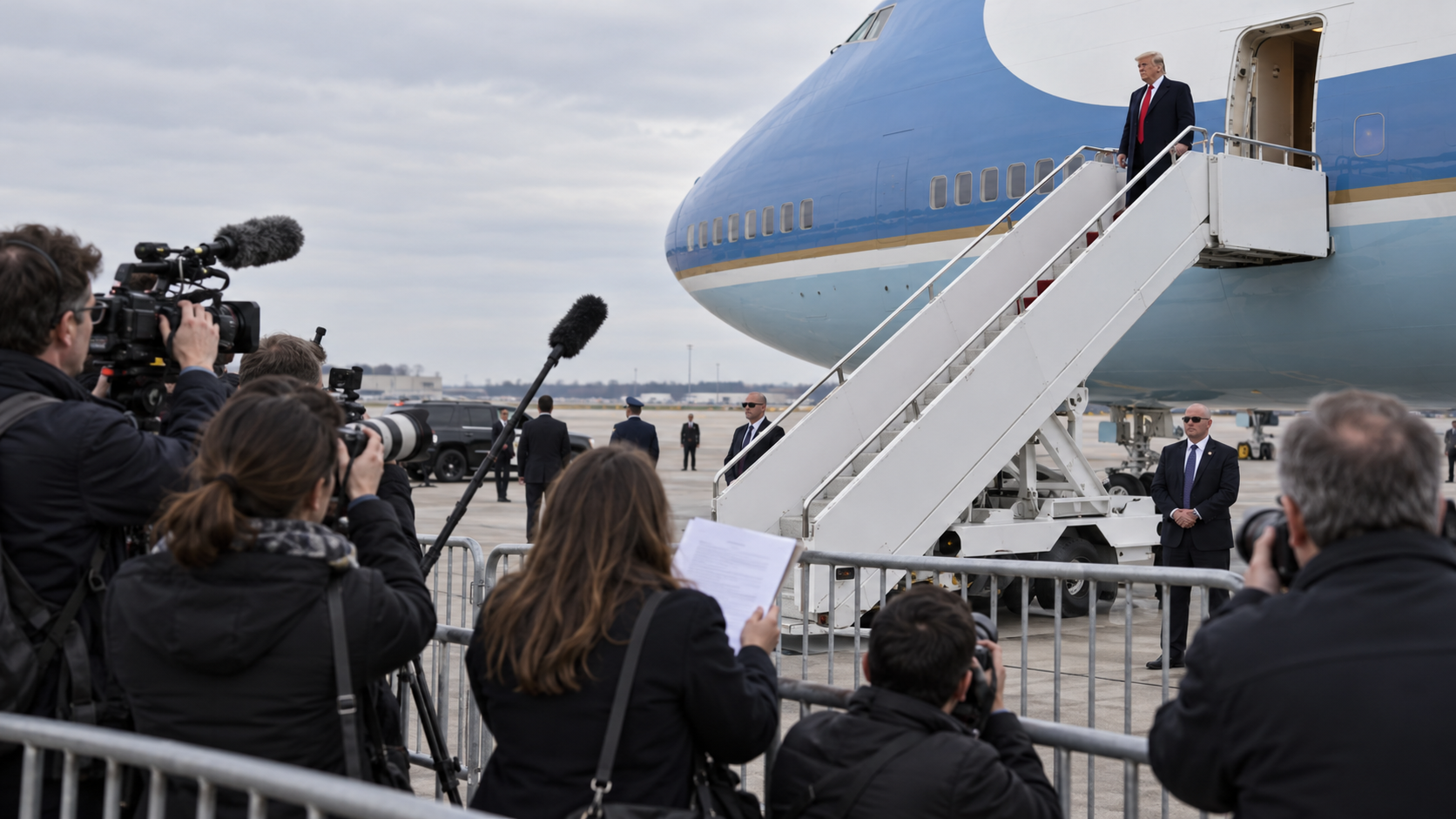
CNN, MS NOW and Politico expanded their press access lawsuit against the Trump White House on Wednesday, telling a federal court that the administration is still keeping their journalists away from Trump even after a judge ordered their access restored.
In an amended complaint, the three outlets say the White House has found a new way to shut them out: the press pool. The pool is a small rotating group of reporters who cover Trump in tight spaces where the full press corps can’t fit, like the Oval Office and Air Force One. News organizations take turns filling those seats, and the pool shares what it sees with every other outlet.
According to the filing, CNN has been pulled from all six Air Force One trips it was scheduled to cover as the television pool network since the ban was announced on Sept. 18. Politico says it has been blocked from two out of town pool assignments, and MS NOW says it has not been allowed into the secondary television pool at all since the ban.
The political news that affects your wallet, your rights and your vote, broken down in plain language. Free in your inbox.
The fight started in September, when Trump announced on Truth Social that he was barring CNN, MS NOW and Politico from the White House. The administration deactivated the outlets’ access badges, and reporters from CNN and MS NOW were left doing live shots from street corners outside the grounds. Vice President JD Vance argued at the time that the outlets had only lost their “special access” and were not banned from reporting.
The outlets sued days later, calling the ban a violation of the First Amendment. U.S. District Judge Timothy Kelly sided with them and issued a preliminary injunction, a court order that blocks an action while a case plays out, after finding the ban likely punished journalists for their reporting. The White House restored their press credentials after the ruling.
Now the outlets say that was only half the fix. The expanded press access lawsuit argues the ongoing pool exclusions violate both the First Amendment, which protects free speech and a free press, and the Fifth Amendment, which guarantees due process. The outlets acknowledge they don’t have an automatic right to fly on Air Force One or walk into every room Trump is in. Their argument is narrower: once the White House opens those spaces to some journalists, it can’t lock out specific outlets because officials don’t like their coverage.
They are asking the court to declare the exclusions unlawful and issue a permanent injunction, which would make the protection final instead of temporary. The White House has not publicly responded to the new filing.
The case echoes an earlier battle with The Associated Press. The administration restricted the AP’s access after the news agency kept using the name Gulf of Mexico instead of Trump’s preferred name for the body of water. A judge first ordered the AP’s access restored, but an appeals court later allowed the restrictions to stand, in part because they only covered limited spaces like the Oval Office and Air Force One. That ruling could weigh heavily on this press access lawsuit, since the pool is exactly where the fight has now moved.
For readers, this is bigger than three newsrooms. The pool is how the public learns what Trump says and does in rooms most reporters never enter. If the White House gets to choose which outlets fill those seats based on their coverage, it gets to shape what Americans see of the presidency itself.

