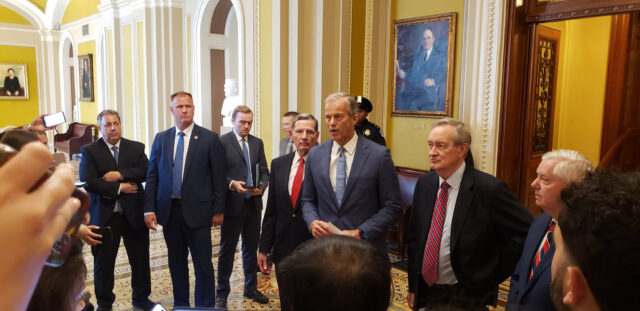
Senate Republicans are pushing to delay their upcoming GOP leadership elections as members of the party face growing questions about what went wrong in the 2026 midterm elections and who should lead them when Democrats take control of the chamber next year.
Sens. Ron Johnson of Wisconsin and Dave McCormick of Pennsylvania are among the Republicans calling for more time before the party votes on its leadership team. The elections are currently scheduled for Tuesday, November 10.
Johnson has been organizing the effort to postpone the vote, arguing that Republicans should have a serious discussion about their election losses before deciding who will occupy the party’s top leadership positions.
The political news that affects your wallet, your rights and your vote, broken down in plain language. Free in your inbox.
According to reporting by the Washington Examiner, Johnson gathered the five Republican signatures required to formally request a meeting of the Senate Republican Conference to discuss postponing the elections.
Under conference rules, five senators can force a meeting to address the request. That does not automatically cancel or postpone the scheduled leadership vote.
McCormick joined the push Sunday, saying Republicans need to examine the election results and discuss how the party should move forward before selecting its leaders.
In a statement shared publicly, McCormick said his experience in business and the Army taught him that following a failure, organizations must begin with honesty, transparency and accountability.
He also said he had raised his concerns directly with Senate Majority Leader John Thune.
McCormick emphasized that he was not calling for Thune to resign. Instead, he argued that Tuesday was too soon to hold leadership elections before Republicans had adequately discussed the midterm results.
Thune, a Republican from South Dakota, has led the Senate Republican Conference since January 2025. He is widely expected to retain his leadership position, and no Republican has publicly announced a challenge to him.
However, the debate over the timing of the election comes as Republicans prepare to move into the minority for the next Congress. Democrats’ midterm victories have changed the balance of power in the Senate, ending Republican control when the new Congress begins in January 2027.
The leadership dispute also comes amid disagreements between Thune and Trump over the Senate’s handling of the administration’s legislative priorities.
Trump has criticized the Senate for failing to advance some of his priorities, including the SAVE America Act, and has expressed frustration with Thune’s position on eliminating the filibuster, a Senate procedure that allows lawmakers to delay or block legislation unless supporters can overcome a 60-vote threshold in most circumstances.
Trump declined to say Friday whether he believes Thune should continue leading Senate Republicans, saying the decision belongs to Republican senators.
The push to delay the elections does not necessarily mean Republicans are preparing to replace Thune. The senators backing the postponement have framed their request as an opportunity to examine the party’s losses before making leadership decisions.
With the scheduled vote approaching, Republicans must decide whether to proceed with their existing timeline or give members additional time to debate the party’s direction.
The outcome could shape how Republicans organize their opposition to the incoming Democratic Senate majority and approach the final two years of Trump’s current term.