Poli Alert Politics & Civics

Related Articles
The Trump administration is using taxpayer dollars to air a television advertisement that closely mirrors one of Donald Trump’s 2024 campaign videos, escalating a growing controversy over whether the White House is using public money to promote the president’s political message.
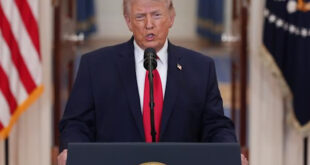
The 30-second spot shows Trump walking down a hallway in dramatic black-and-white footage while warning of a “final battle” against “warmongers,” “globalists” and what he calls the “deep state.” It ends with a disclosure stating, “Paid for by the U.S. Government.”
The video is nearly identical to an advertisement Trump posted during his 2024 presidential campaign. That version urged viewers to join Trump’s political fight and carried his campaign branding. The government-funded version removes the campaign logo and final political appeal but retains much of the same imagery and rhetoric.
The White House describes the advertisements as public service announcements. But the resemblance to Trump’s campaign material has prompted criticism from lawmakers and former government ethics officials, who argue that the administration is blurring the line between official government communications and political promotion.
A campaign message with a government disclaimer
The latest ad is part of a series of television spots the White House has described as patriotic public service announcements. Earlier ads featured Trump discussing communism and other themes associated with his political agenda.
The newest spot goes further by repurposing material from Trump’s own presidential campaign.
In the ad, Trump says he will “demolish the deep state,” “expel the warmongers from our government” and “throw off the sick political class that hates our country.” He also promises to “rout the fake news media” and “liberate America from these villains once and for all.”
The ad has aired during high-profile television programming, including Saturday Night Live, Fox News Sunday and college and NFL football games. AdImpact, a political advertising tracking firm, estimated that more than $300,000 had already been spent on the latest spot as of Sunday.
It remains unclear which federal agency produced and paid for the advertisements.
Federal law puts taxpayer-funded propaganda under scrutiny
Federal appropriations laws have long restricted agencies from using government money for “publicity or propaganda” purposes. The Government Accountability Office has interpreted those restrictions as covering, among other things, purely partisan material, self-aggrandizing communications and covert propaganda.
GAO has also made clear that federal agencies can communicate with the public about government programs and policies. The legal question is where legitimate government communication ends and partisan political promotion begins.
That distinction is particularly relevant here because the latest government-funded spot is not merely similar in tone to a Trump campaign advertisement. It repurposes a video from Trump’s 2024 campaign, replacing the campaign branding with a government funding disclaimer.
The existence of the government disclaimer does not, by itself, resolve whether the underlying spending complies with federal restrictions.
White House defends the ads
The White House has defended the advertisements as patriotic public service announcements and said they are intended to remind Americans about what makes the country worth defending.
A White House spokesperson said the ads are educational and “unapologetically patriotic.”
Another administration official argued that the spots are not political because Trump is not currently on the ballot and the ads do not contain an explicit call to vote or support a candidate.
The White House has also pointed to advertising campaigns under previous administrations, including efforts by the George W. Bush, Barack Obama and Joe Biden administrations.
But past government advertising has also drawn scrutiny from GAO. The agency previously found violations involving Bush- and Obama-era communications, including concerns over undisclosed government sourcing and the use of appropriated funds for improper publicity or propaganda.
Critics say the line is becoming harder to defend
The controversy has drawn criticism from Democrats and some government-watchdog voices, who argue that taxpayers should not be financing material that looks indistinguishable from presidential campaign messaging.
Democratic appropriators accused the administration of using taxpayer money for what they described as government propaganda and questioned the legality of the spending.
Republican Sen. John Kennedy of Louisiana also said Sunday that public officials should not “spend public money on private ads for themselves.”
The criticism reflects a broader concern about the use of government resources to amplify a president’s personal political brand. The latest advertisement does not simply promote a federal program or explain a government policy; it features Trump delivering the same political themes and imagery that appeared in his campaign messaging.
For the administration, the central question is whether the advertisements can legitimately be characterized as government communications despite their overtly political language and the reuse of campaign material.
For critics, the issue is more basic: whether taxpayers should be paying for an advertisement that Trump’s own campaign could have produced.