Poli Alert Politics & Civics
Related Articles


The Trump administration is preparing a $2.8 billion arms package for Israel that would include 40,000 2,000-pound bombs, reviving the transfer of weapons whose delivery the Biden administration paused in 2024 over concerns about civilian casualties in Gaza.
The proposed package includes 20,000 MK-84 bombs and 20,000 BLU-117 bombs, according to U.S. officials familiar with the plan. The Washington Post reported that the package would also include 20,000 I-2000 penetrator warheads. The deal has been informally communicated to congressional committees but has not been finalized.
Most of the package would be financed through the Foreign Military Financing program, under which the United States provides funding that Israel can use to purchase American-made weapons.
The proposed sale comes as the Trump administration continues to strengthen Israel’s military capabilities despite ongoing international criticism of Israel’s conduct in Gaza and continuing violence under a fragile ceasefire.
Weapons at the center of the deal
The MK-84 is a 2,000-pound general-purpose bomb capable of producing a large blast and sending fragments over a wide area. The BLU-117 is a variant of the MK-84 with a thermal protective coating, while the I-2000 is designed for penetrating hardened targets.
The weapons have previously been used by Israel in Gaza and Lebanon. Analysts examining strike footage and remnants recovered at attack sites have identified U.S.-made 2,000-pound munitions among weapons believed to have been used in the Gaza war.
The size of the proposed shipment would make it one of the largest recent U.S. transfers of 2,000-pound munitions to Israel. The Washington Post reported that it would exceed previous packages approved during both the Biden and Trump administrations.
Why Biden paused the bombs
The proposed transfer revives a dispute that began during the Biden administration.
In May 2024, President Joe Biden paused a shipment containing 2,000-pound bombs and other munitions as Israel prepared for its military operation in Rafah. Biden administration officials said they were concerned about the potential for large numbers of civilian casualties if the weapons were used in densely populated areas.
Trump reversed that policy after returning to office in January 2025, allowing the previously restricted bombs to again be transferred to Israel.
The Trump administration later approved additional major weapons packages for Israel, including a nearly $3 billion sale in 2025 and another series of arms sales totaling $6.67 billion in January.
Congress has been notified
Congress has received informal notification of the proposed transaction, setting up a potential congressional debate over the scale and nature of U.S. military assistance to Israel.
A senior Trump administration official told The Washington Post that foreign arms sales are proceeding through the appropriate process but declined to comment specifically on the pending transaction. The Israeli Embassy did not respond to the newspaper’s request for comment.
The proposed sale comes as congressional debate over U.S. support for Israel has intensified. Some lawmakers have sought restrictions on military assistance because of concerns about civilian casualties and Israel’s conduct of the Gaza war, while other lawmakers continue to support expanded military assistance.
Gaza war remains central to debate
The proposed weapons transfer comes nearly three years after the Hamas-led attack on southern Israel on Oct. 7, 2023, killed about 1,200 people and resulted in 251 hostages being taken, according to Israeli authorities.
Israel responded with a military campaign in Gaza that has killed more than 73,000 Palestinians, according to Gaza’s Health Ministry. The figures do not distinguish between civilians and combatants. Israel says its military campaign is directed at Hamas and other armed groups and has defended its strikes as necessary to prevent further attacks.
A fragile ceasefire has reduced the intensity of fighting, but Israeli strikes and militant attacks have continued. The Washington Post reported that Israel continued carrying out strikes in Gaza even after recent U.S. efforts to strengthen the ceasefire.
The proposed bomb sale therefore places a longstanding U.S.-Israeli security relationship against continuing questions over how American weapons are used in Gaza.
U.S.-Israel relationship
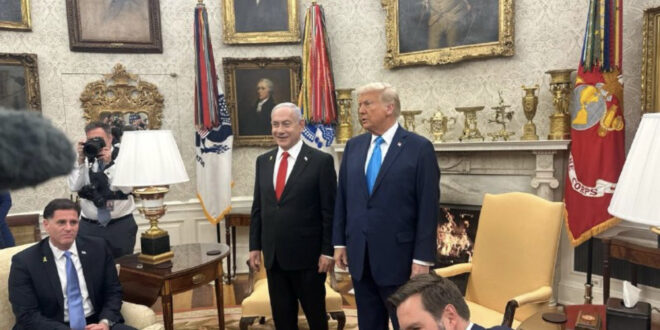
The package also comes amid complicated relations between Trump and Israeli Prime Minister Benjamin Netanyahu.
The two leaders have maintained close ties while occasionally disagreeing over military strategy and regional conflicts. Their relationship has faced additional pressure following the U.S.-Israeli war with Iran earlier this year.
The planned weapons package nevertheless underscores the continued military cooperation between Washington and Jerusalem.
For the Trump administration, the proposed transfer would replenish Israel’s stocks of heavy munitions while maintaining a longstanding U.S. commitment to Israel’s military security.
For opponents, the size of the package and the history of the weapons in Gaza raise questions about whether the United States should continue supplying heavy munitions while civilian casualties and allegations surrounding Israel’s military campaign remain under international scrutiny.
The proposed sale is not yet final, leaving its ultimate scope and timing subject to the remaining U.S. arms-sale process and congressional scrutiny.