Poli Alert Politics & Civics
Related Articles
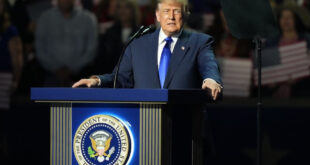

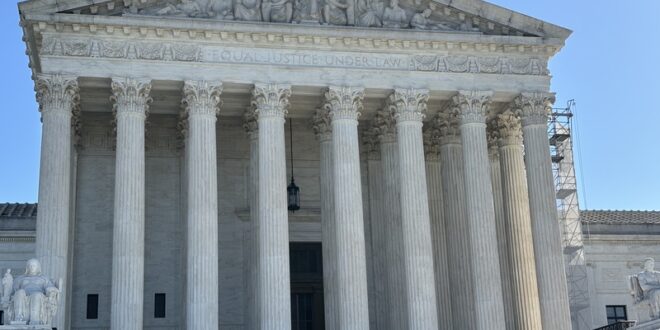
The U.S. Supreme Court has again rejected an effort to use a congressional map backed by President Donald Trump in Missouri’s November elections, leaving the state’s previous congressional districts in place for now as a separate federal appeal moves forward.
The latest Supreme Court action adds another twist to a rapidly escalating legal battle that has left Missouri election officials caught between conflicting state and federal court orders just weeks before ballots are distributed.
The Trump-backed map was designed to give Republicans a stronger chance of winning seven of Missouri’s eight U.S. House seats, including by reshaping the Kansas City-area district held by Democratic Rep. Emanuel Cleaver.
The Supreme Court previously declined Missouri Secretary of State Denny Hoskins’ emergency request to block a Missouri Supreme Court ruling that barred use of the new map. That ruling ordered Missouri to use the congressional districts adopted after the 2020 census and placed the disputed map before voters in a November referendum. The U.S. Supreme Court docket shows Justice Brett Kavanaugh denied Missouri’s emergency application, 26A304, on Sept. 8.
But the legal fight did not end there.
Supreme Court Pauses Conflicting Federal Order
Hours after Kavanaugh rejected Missouri’s request, U.S. District Judge Stephen Clark issued a temporary restraining order directing the state to use the newer, Republican-backed map instead.
Clark said changing districts after the August primary could cause voters to cast general-election ballots for candidates who had not been nominated in the districts they would ultimately represent. His order created a direct conflict with the Missouri Supreme Court’s ruling.
Redistricting opponents then appealed to the 8th U.S. Circuit Court of Appeals and, after that court did not provide the relief they sought, asked the U.S. Supreme Court to intervene.
On Thursday, the Supreme Court granted a stay of Clark’s federal order. The stay pauses that order while the federal appeal proceeds and potentially while the Supreme Court considers a future petition.
The practical effect is that Clark’s order requiring the new map is temporarily blocked, while the Missouri Supreme Court’s earlier injunction against using the new map remains significant.
Hoskins Faces Contempt Hearing
The competing orders have also placed Hoskins at the center of a separate legal dispute.
The Missouri Supreme Court ordered Hoskins to appear Thursday for a contempt hearing after opponents accused him of violating the court’s Sept. 3 injunction by instructing local election officials to use the Trump-backed map.
The state court specifically ordered Hoskins to explain why his Sept. 8 instructions did not violate its injunction and why he should not be held in contempt.
Hoskins has argued that he was required to follow the federal court’s order.
In a statement issued Tuesday, Hoskins said the Trump-backed Missouri First Congressional Map remained in effect and argued that using different districts for the general election would create a constitutional crisis.
The latest Supreme Court action temporarily removes one side of that conflict by pausing the federal order that required Hoskins to use the newer map.
How Missouri Got Here
The dispute began after Missouri Republicans adopted a new congressional map during a special legislative session following Trump’s push for Republican-controlled states to redraw congressional districts ahead of the midterms.
The map targeted Cleaver’s Kansas City-based district and was designed to improve Republican chances of winning seven of Missouri’s eight House seats, potentially giving the party one additional seat.
Opponents organized a referendum effort and submitted more than 300,000 signatures challenging the new districts.
Hoskins rejected the petition in August, arguing that Missouri’s referendum process could not be used to challenge a congressional redistricting plan. The Missouri Supreme Court later rejected that interpretation and ruled that the referendum was authorized under the state Constitution.
The court also concluded that the new map had never legally taken effect and ordered officials to use the previous congressional districts for the November election.
November Election Still Faces Uncertainty
The dispute is particularly consequential because Missouri already conducted its August primary using the newer congressional boundaries.
Republican officials have argued that changing districts between the primary and general election could disrupt the candidates voters nominated and create logistical problems for election administrators.
A lower-court filing cited the need to move hundreds of thousands of voters between congressional districts and said Missouri’s voter-registration system was locked for the election process.
The Missouri Supreme Court, however, determined that the new map was never legally operative for the general election after the referendum petition was filed.
The Supreme Court’s latest order does not resolve the underlying dispute over which map Missouri should ultimately use. Instead, it pauses the federal order requiring the new map while the federal appeals process continues.
For now, the legal battle continues on multiple fronts, with Hoskins facing a state contempt hearing and the federal appeal moving through the courts.
The November election is now only weeks away, leaving Missouri voters, candidates and election officials waiting for the courts to determine which congressional boundaries will govern the general election.