Poli Alert Politics & Civics
Related Articles


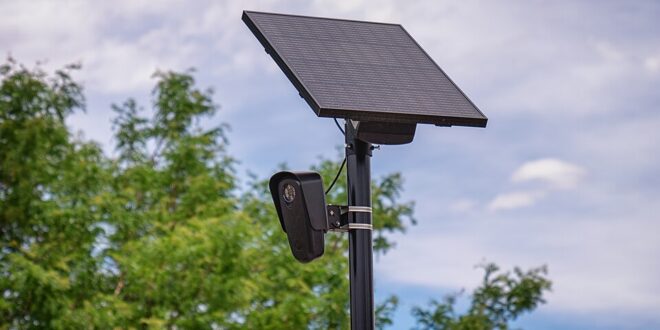
Across the United States, police departments and other organizations are rapidly building networks of cameras that can record where vehicles travel, when they pass and what they look like.
The technology, known as automated license plate recognition, is marketed as a powerful crime-fighting tool. But its rapid expansion is also creating something far larger: a nationwide infrastructure capable of collecting detailed information about millions of people’s movements.
At the center of that expansion is Flock Safety, an Atlanta-based company whose cameras have become so common that “Flock cameras” is increasingly used as shorthand for the broader category of AI-powered license plate readers.
Flock says more than 7,000 organizations have contracts with the company. Police agencies are the biggest users, but colleges, homeowners associations and other organizations have also installed the systems.
The growth has sparked a fundamental question that communities across the country are now confronting: Who controls the data, who can search it and how far can that information travel?
How Flock cameras build a record of vehicles
Flock’s cameras use artificial intelligence and other software to identify vehicles and license plates. The systems can capture a vehicle’s license plate number, make, model, color, distinctive features, location and the time it was observed.
The cameras can detect vehicles from as far as 75 feet away, according to Flock.
Unlike a traditional security camera that records a scene for later review, automated license plate readers turn passing vehicles into searchable data points. A police department can potentially use those records to determine whether a particular vehicle appeared near a crime scene or trace where it was previously observed.
The technology can also be connected to other systems, including automated speed enforcement equipment.
That ability to quickly generate investigative leads has made ALPR systems increasingly popular with law enforcement.
Investigators have credited license plate readers with providing critical information in high-profile cases, including the manhunt for Ryan Routh, who was sentenced to life in prison after being convicted of plotting to assassinate then-President Donald Trump at one of his Florida golf courses in 2024.
The International Association of Chiefs of Police has also promoted ALPR technology as a valuable crime-fighting tool.
But the scale of the networks creates a different concern: The cameras don’t only record vehicles suspected of crimes. They can collect information about everyone who passes them.
The surveillance question
That distinction is at the heart of the backlash.
A driver does not have to be suspected of committing a crime to have a vehicle captured by an ALPR camera. Once collected, information about where that vehicle was seen can potentially become part of a searchable database.
Daniel J. Solove, a George Washington University law professor and author of On Privacy and Technology, described the technology as a form of “dragnet” surveillance.
The concern is not simply that a single police department can see a license plate. It is that interconnected camera networks can create a searchable record of movements over time.
That raises questions about how long information should be retained, what constitutes a legitimate search and whether police should need a warrant to obtain certain location information.
Those questions are increasingly colliding with the Fourth Amendment’s protections against unreasonable searches and seizures.
The constitutional framework was developed long before governments could use artificial intelligence to collect and analyze millions of vehicle sightings.
Immigration enforcement raises the stakes
The debate has taken on new urgency as the Trump administration has expanded immigration enforcement across the country.
Privacy advocates have raised concerns that information collected by local police could ultimately become available to federal agencies, including Immigration and Customs Enforcement.
Flock says it does not work with ICE and that, by default, its data is not shared with federal agencies. The company says communities and organizations using its technology control how their information is accessed.
But critics say that distinction does not eliminate the possibility of federal access.
Federal agencies can potentially request information from local law enforcement agencies that operate ALPR networks, putting the responsibility on individual communities to determine what information they will share and under what circumstances.
In Washington state, at least seven police departments and one sheriff’s office had granted U.S. Border Patrol access to their license plate reader networks in 2025, according to an analysis by the University of Washington.
An audit by the city of Columbus, Ohio, found that its Flock data had been searched more than 15,000 times for potential immigration-related purposes since 2024.
The findings have fueled concerns that a surveillance system installed locally for crime prevention could eventually be used for purposes that residents never anticipated.
The danger isn’t only federal access
There is another vulnerability: the people operating the systems themselves.
Several law enforcement officers have been disciplined for improperly using Flock data.
In Milwaukee, an officer was criminally charged after allegedly using camera information to track a person he was dating and that person’s former partner.
Such cases demonstrate why critics say the issue is not simply whether government agencies should have access to ALPR data, but what controls exist once officials have it.
The company has added access controls and audit logs that can help police departments identify suspicious searches. Flock has also encouraged customers to establish transparency portals that allow communities to make certain audit information available to the public.
But safeguards are only as effective as the policies and oversight surrounding them.
Cities are beginning to push back
The rapid spread of the technology has triggered a counter-movement in communities that initially embraced the cameras.
Dozens of cities and other organizations have deactivated cameras or declined to renew contracts amid concerns about mass surveillance, data retention and access.
Los Angeles suspended the use of 138 Flock-operated cameras in July after public opposition intensified. City officials said they wanted additional restrictions on the information collected by the systems.
In February, Amazon-owned Ring ended a short-lived partnership with Flock that would have allowed homeowners to share Ring camera footage with local police during investigations.
Some cities have taken more unusual measures.
Officials in Verona, Wisconsin, and Dayton, Ohio, placed bags over Flock cameras after deciding not to renew contracts with the company.
In other communities, cameras have been vandalized. At least six were cut down in Houston, according to local reports, while authorities in Troy, New York, investigated the destruction of three Flock cameras.
Groups such as DeFlock have emerged specifically to oppose the proliferation of ALPR systems and map where the cameras are located.
The fight is moving from technology to policy
The central issue is no longer whether automated license plate readers can help police solve crimes. They can.
The harder question is what society is willing to sacrifice in exchange for that capability.
If a camera network can tell police where a suspect’s vehicle was seen, it can also potentially reveal where an ordinary person traveled. If the information can help investigators solve a violent crime, it can also be misused to stalk someone. And if local police can access the data, communities must decide what happens when federal agencies ask for it.
Those competing possibilities are forcing cities and states to confront questions that technology has advanced faster than lawmakers have answered.
Who gets access?
How long is the information stored?
When can police search it?
Does a warrant need to be obtained?
Can federal agencies request the information?
Can private organizations share it?
And what happens when an officer abuses the system?
Those questions could ultimately determine whether Flock cameras remain primarily a targeted investigative tool or become part of a much broader system of routine government surveillance.
As more cameras go up across American roads, the debate is shifting from whether the technology works to whether Americans have enough control over the information it collects about them.
Meta Description: Flock cameras are creating a nationwide vehicle surveillance network, raising questions about data access, privacy, immigration enforcement and police oversight.
SEO Keywords: Flock cameras, Flock Safety, license plate surveillance, ALPR cameras, automated license plate readers, AI surveillance, police surveillance, privacy
Focus Keyphrase: Flock surveillance