Poli Alert Politics & Civics
Related Articles
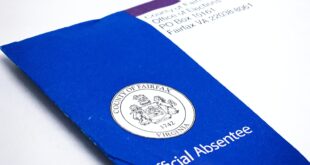

The Trump administration asked the U.S. Supreme Court on Monday to revive President Donald Trump’s executive order restricting vote-by-mail after a federal appeals court refused to allow the policy to take effect ahead of November’s midterm elections.
The emergency appeal comes just two days after the 1st U.S. Circuit Court of Appeals upheld a lower court ruling blocking key provisions of Trump’s March 31 executive order in the 23 states and the District of Columbia that challenged it.
The case now sets up a high-stakes legal showdown at the nation’s highest court just over three months before voters head to the polls in elections that will determine control of Congress.
“The district court has issued an extraordinary injunction barring federal agencies from implementing an Executive Order promoting election integrity in the upcoming federal elections in November,” Solicitor General D. John Sauer wrote in the administration’s filing.
Sauer argued the lower courts acted prematurely because the U.S. Postal Service has not finalized the regulations needed to implement the executive order. He contended the injunction should be lifted while the administration completes that process.
The appeals court, however, found that states already face immediate consequences because the order requires them to prepare for new mail ballot procedures months before Election Day.
In a 2-1 decision issued Saturday, Judges Gustavo A. Gelpí and Julie Rikelman concluded that the executive order gives federal officials an unprecedented role in administering elections, an authority the Constitution reserves primarily for the states.
“The Government has failed to convince us that the impact of the Executive Order on the Plaintiff States is ‘hypothetical,’” the judges wrote.
Judge Joshua D. Dunlap agreed in part but dissented on other portions of the ruling, noting the Postal Service has not yet finalized the required regulations while acknowledging the executive order’s timeline would still force states to begin preparing immediately.
The executive order directs the Postal Service to require states to notify the agency 90 days before federal elections if they intend to use vote-by-mail. States would also have to submit lists of eligible voters at least 60 days before ballots are mailed.
In addition, the order instructs the Department of Homeland Security, working with the Social Security Administration, to create state-by-state citizenship lists using federal naturalization records, Social Security data and the SAVE citizenship verification database.
U.S. District Judge Indira Talwani, who initially blocked the order, ruled that the administration failed to identify constitutional or statutory authority allowing the federal government to impose those requirements or create the proposed voter eligibility lists.
Election officials challenging the order argued that implementing such sweeping changes this close to the election would disrupt months of planning and force states to overhaul established mail voting procedures on short notice.
The lawsuit was brought by Democratic officials in 23 states and the District of Columbia, including California, Pennsylvania, Michigan, Wisconsin, Arizona, Nevada and North Carolina.
Twelve Republican-led states — Alabama, Florida, Indiana, Kansas, Louisiana, Missouri, Montana, Nebraska, Oklahoma, South Carolina, South Dakota and Texas — joined the federal government in defending the executive order.
Trump has repeatedly argued that tighter mail voting rules are necessary to prevent noncitizens from voting, despite election officials and numerous studies finding such cases are rare.
Public opinion on mail voting has shifted sharply among Republicans in recent years. According to the Pew Research Center, 71% of voters, including 57% of Republicans, supported vote-by-mail in 2018. By April 2026, Republican support had fallen to 34%, while Democratic support remained overwhelmingly favorable.
The Supreme Court has not indicated when it will act on the administration’s emergency request.