 Poli Alert Politics & Civics
Related Articles


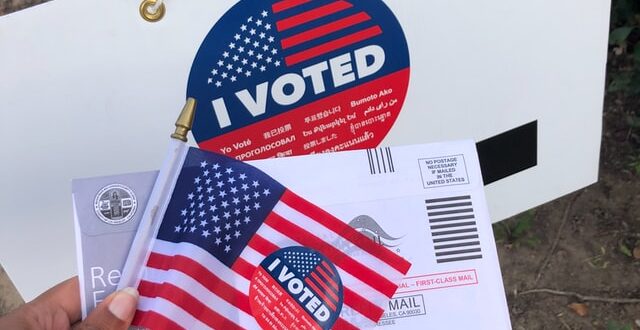
A federal judge on Thursday blocked major provisions of President Donald Trump’s executive order targeting mail voting, ruling that the administration’s attempt to reshape election procedures exceeds federal authority and infringes on powers reserved for the states.
U.S. District Judge Indira Talwani issued the decision in Boston, preventing enforcement of portions of a March executive order that sought to establish federal voter lists and direct the U.S. Postal Service to limit delivery of mail ballots based on those lists.
The ruling represents another legal setback for Trump’s election agenda as the administration faces mounting judicial scrutiny over efforts to alter voting procedures ahead of the 2026 midterm elections.
Judge Talwani, an appointee of former President Barack Obama, concluded that the executive branch lacks constitutional authority to impose election administration requirements traditionally controlled by state governments.
Mail Voting Restrictions Halted
Trump’s executive order, signed in March, directed federal agencies to create centralized voter databases and sought to involve the Postal Service in determining which voters would be eligible to receive mail ballots.
Critics argued that the order represented an unprecedented federal intrusion into election administration, a responsibility largely delegated to states under the Constitution.
Election law experts had widely anticipated legal challenges, noting that states traditionally oversee voter registration systems, ballot distribution, and election procedures.
Thursday’s decision effectively prevents implementation of the order while legal challenges continue.
Second Major Election Defeat in Two Days
The ruling follows another significant judicial setback for the administration.
On Wednesday, a separate federal judge in Boston permanently blocked Trump’s earlier executive order requiring voters to provide proof of citizenship when registering to vote.
Together, the two decisions halt some of the most consequential election-related actions Trump has pursued since returning to office.
The administration is expected to appeal both rulings.
Trump Pushes Broader Election Overhaul
Since beginning his second term, Trump has made election reform a central policy objective, frequently arguing that stronger safeguards are needed to protect election integrity.
The president has repeatedly raised concerns about voter fraud and has called for stricter registration and voting requirements.
His administration has pursued several initiatives, including seeking access to state voter rolls, reviewing election procedures, and exploring expanded federal involvement in election administration.
Trump has also strongly advocated for the SAVE America Act, legislation that would establish new voter identification requirements and mandate proof of citizenship for voter registration.
The measure has become a top White House priority, although it currently lacks sufficient support to advance through the Senate.
Housing Bill Signing Delayed Over Election Push
The president’s focus on election legislation was underscored this week when he abruptly postponed signing a bipartisan housing affordability bill passed by Congress.
Trump announced Wednesday that he would delay action on the housing legislation until lawmakers address the SAVE America Act, describing election security as a higher priority.
The move drew criticism from both Democrats and some Republicans who had championed the housing package as a response to rising home prices and affordability concerns.
Continued Debate Over Election Claims
Trump’s election agenda has been shaped in part by his longstanding claims that widespread voter fraud affected the 2020 presidential election.
However, courts, election officials, and numerous investigations have repeatedly found no evidence of fraud on a scale sufficient to alter the outcome of that election.
Several officials now serving in the administration previously participated in efforts challenging the 2020 results, including election attorney Kurt Olsen and election analyst Heather Honey.
The administration maintains that its proposals are intended to strengthen election security and voter confidence, while opponents argue the measures could restrict voter access and exceed presidential authority.
The latest court rulings ensure that many of those disputes will continue to play out in federal courts as the nation moves closer to the 2026 election cycle.

