 Poli Alert Politics & Civics
Related Articles



A Republican-backed effort to advance congressional oversight of U.S. military involvement in Iran collapsed Wednesday night after two key GOP senators reversed their positions following a contentious confrontation with President Donald Trump and a subsequent White House briefing.
The Senate voted 47-50-1 against advancing a war powers resolution that would have allowed Congress to direct the president to remove U.S. armed forces from hostilities involving Iran unless lawmakers explicitly authorized military action through a declaration of war or specific authorization.
The vote marked a dramatic turnaround after Sens. Bill Cassidy of Louisiana and Rand Paul of Kentucky, both Republicans, had previously supported moving the measure forward.
Their shift came hours after a closed-door lunch meeting with Trump that reportedly devolved into a heated exchange over the administration’s handling of the Iran conflict, which has stretched far beyond its originally stated timeline.
Heated Exchange at White House Meeting
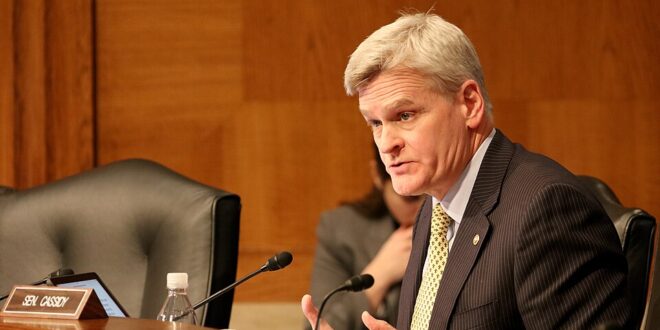
Cassidy later acknowledged losing his temper during the discussion, citing frustration over what he described as insufficient information from the administration regarding U.S. objectives and progress in Iran.
Speaking with reporters, Cassidy said he challenged Trump directly over the status of the conflict.
“This war was supposed to last four weeks. It’s lasted four months. Our original objectives have not been achieved, and I want to know what’s going on,” Cassidy said.
According to the senator, Trump raised his voice during the exchange as tensions escalated.
Cassidy, who lost his recent primary election to a Trump-backed challenger, indicated he was prepared to support the war powers measure unless he received a more comprehensive briefing on the administration’s strategy.
White House Briefing Changes Outcome
Later Wednesday, Cassidy attended a private White House briefing led by Vice President JD Vance and special envoy Steve Witkoff.
Following the meeting, Cassidy announced he would oppose the resolution.
“I want to thank Vice President Vance and Special Envoy Witkoff for the thorough briefing this afternoon on Iran,” Cassidy wrote on social media. “I appreciate the quick invitation to the White House to address many of my concerns.”
Paul also backed away from supporting the measure, voting “present” rather than “yes.”
The Kentucky senator said his decision was intended to give Trump additional flexibility during ongoing negotiations.
“I did so to give the President more space and leverage to negotiate a lasting peace,” Paul said.
Resolution Fails as Senate Prepares to Recess
The defeat effectively halts Senate action on the measure before lawmakers leave Washington for a two-week recess.
Had the resolution ultimately passed both chambers of Congress, Trump would have faced a politically difficult decision: either comply with congressional demands or issue a veto to preserve military operations.
The administration has consistently argued that congressional war powers measures are unconstitutional, citing legal questions surrounding congressional actions that do not require presidential approval.
Democrats Accuse Trump of Pressuring Republicans
Democrats sharply criticized Trump’s intervention.
Sen. Tim Kaine, who introduced the resolution, accused the president of intimidating Republican lawmakers into abandoning support for congressional oversight.
“Trump tried to browbeat Republican senators for upholding their oaths of office,” Kaine said in a statement after the vote.
Kaine argued that despite the procedural defeat, Congress had already expressed opposition to further military escalation without legislative authorization.
“The vote is of no consequence and does not undo the expressed position of Congress that further war against Iran is illegal unless Congress votes for it,” he said.
Trump Downplays Internal Disputes
Trump made little effort to conceal the disagreements within his party.
Asked about the meeting before departing Washington, the president described it as productive while acknowledging tensions.
“We had a really great meeting,” Trump told reporters. “We like everyone in the room.”
He then added: “I don’t like a few people, but that’s OK.”
The vote comes as the administration continues pursuing negotiations with Iran while simultaneously facing criticism from both hawkish and isolationist factions within the Republican Party over the conflict’s duration, costs and objectives.

