 Poli Alert Politics & Civics
Related Articles


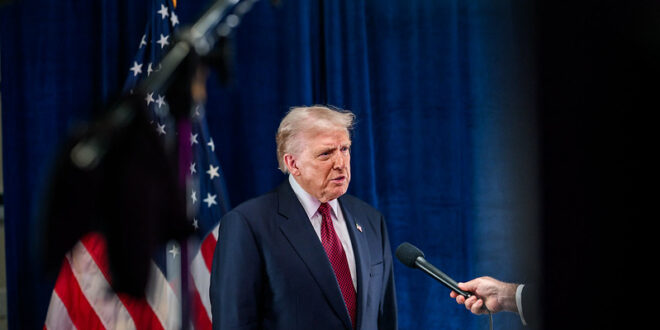
President Donald Trump abruptly postponed signing a major bipartisan housing affordability bill on Wednesday, declaring he would withhold support for the legislation until Congress advances his election reform proposal, the SAVE America Act.
The move stunned lawmakers from both parties and injected uncertainty into what had been one of the few major bipartisan policy victories of Trump’s second term.
In a post on Truth Social, Trump announced the cancellation of a planned White House signing ceremony for the 21st Century ROAD to Housing Act, calling passage of the SAVE America Act a prerequisite for moving forward.
“Today’s Housing News Conference and Signing is hereby cancelled until such time as we pass the desperately needed SAVE AMERICA ACT, which I consider to be a National Emergency,” Trump wrote.
The housing legislation cleared both chambers of Congress with overwhelming bipartisan support and was widely expected to become law this week. The bill aims to address housing affordability by increasing housing supply, expanding homeownership opportunities and limiting the influence of large institutional investors in the single-family housing market.
Housing Bill Earned Rare Bipartisan Backing
The 21st Century ROAD to Housing Act emerged after nearly a year of negotiations among key lawmakers from both parties. Supporters say the legislation would reduce barriers to home construction, streamline development approvals and encourage local governments to accelerate housing projects.
The bill also includes provisions designed to curb the growing role of large investment firms in residential real estate, an issue Trump himself highlighted as a priority during his administration.
House Speaker Mike Johnson and other Republican leaders were promoting the legislation at a Capitol Hill news conference when Trump announced the cancellation.
Johnson acknowledged that Trump wanted to delay action on the bill but emphasized that the president still has time to sign it.
“He’s going to use a little bit more of this window of time and we’re going to go through this together,” Johnson told reporters.
Under federal law, if Congress remains in session and the president neither signs nor vetoes a bill within 10 days (excluding Sundays), it automatically becomes law.
Trump Pushes Election Legislation
Trump’s decision centers on the SAVE America Act, a proposal that would impose stricter election rules nationwide.
Among its provisions are requirements for photo identification at polling places, tighter voter registration standards and restrictions on widespread mail-in voting. Trump has also advocated including measures related to transgender athletes participating in sports competitions.
Democrats have strongly opposed the legislation, arguing it could disenfranchise eligible voters and create barriers to voting. Republican leaders have privately acknowledged that the measure lacks sufficient support to pass Congress in its current form.
Johnson said he discussed a potential compromise with Trump that could incorporate portions of the election proposal into a future budget reconciliation package.
Congressional Leaders Scramble
The delay appears to have caught congressional leaders off guard.
According to multiple reports, House Republican leadership has not yet formally transmitted the housing bill to the White House, a step required to begin the 10-day review period. Senate President Pro Tempore Chuck Grassley also had not completed procedural steps needed before the legislation could be sent to the president.
Despite the setback, many Republicans remain confident Trump will eventually sign the housing measure.
House Financial Services Committee Chairman French Hill, one of the bill’s principal architects, said he believes the president will ultimately approve it.
“The president, when we go through the details of the bill, he’s going to understand that it’s a good product and certainly something that fulfills his promises to bring down the costs,” Hill said.
Democrats Accuse Trump of Playing Politics
Democratic lawmakers quickly criticized Trump’s decision, arguing he was using a popular affordability measure as leverage for an unrelated political objective.
Sen. Elizabeth Warren, who helped negotiate the housing package, accused the president of putting partisan priorities ahead of Americans struggling with rising housing costs.
“The House and the Senate worked together to develop a bill on a bipartisan basis that would help bring down housing costs and Donald Trump is turning his back on it,” Warren said.
Some Republicans also questioned the strategy. Sen. Thom Tillis said he did not understand why Trump would hold up a housing bill over election legislation that appears unlikely to pass.
What Happens Next
Congressional leaders are now working to determine when to formally send the housing bill to the White House. Once delivered, the legislation could still become law without Trump’s signature if Congress remains in session and no veto is issued within the statutory period.
For now, however, one of the most significant bipartisan legislative achievements of the year remains in limbo as Trump seeks to pressure lawmakers into advancing his broader election agenda.

