Poli Alert Politics & Civics
Related Articles



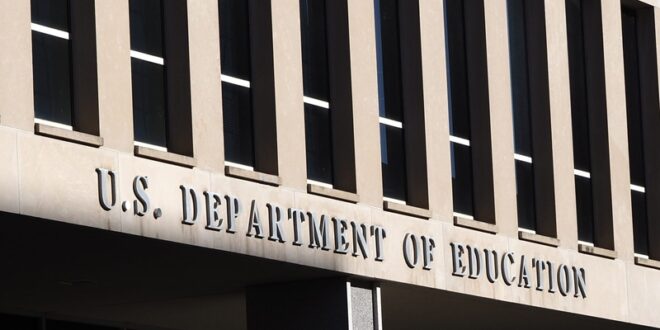
The Trump administration announced Tuesday that major responsibilities traditionally handled by the U.S. Department of Education will be transferred to other federal agencies, marking another significant step in President Donald Trump’s effort to reduce the department’s role in overseeing education nationwide.
Under newly announced interagency agreements, the Department of Health and Human Services will assist in administering federal special education programs, while the Department of Justice will take on expanded responsibilities for investigating and enforcing civil rights complaints involving schools and colleges.
The changes represent the latest move by the administration to redistribute Education Department functions across the federal government as Trump continues pushing his goal of returning education authority “back to the states.”
Education Secretary Linda McMahon said the agreements are intended to improve efficiency while maintaining federal oversight responsibilities required under law.
“The Trump Administration has been clear: as we scale back federal micromanagement when it hinders success, we are equally committed to bolstering the efficacy of federal oversight where it is essential,” McMahon said in a statement.
The Education Department emphasized that it will continue to carry out all responsibilities required by federal statute and that students’ legal protections will remain unchanged.
HHS to Support Special Education Programs
One of the most significant changes involves the Office of Special Education and Rehabilitative Services (OSERS), which oversees programs serving students with disabilities.
OSERS administers the Individuals with Disabilities Education Act (IDEA), the federal law guaranteeing students with disabilities access to a free and appropriate public education.
According to department officials, HHS will assist with grant administration, compliance monitoring, enforcement activities, stakeholder outreach, data collection and funding distribution while OSERS retains its statutory authority.
A senior Education Department official said students with disabilities would not lose any rights under the arrangement.
“Students will not lose any rights, including their right to a free appropriate public education,” the official said during a briefing with reporters. “No agreement can alter the rights that students with disabilities are afforded under federal law.”
The partnership is designed to leverage HHS’s expertise in health and disability services while maintaining Education Department oversight.
Justice Department Expands Civil Rights Role
The administration also announced a new agreement transferring substantial civil rights enforcement support to the Department of Justice.
The Education Department’s Office for Civil Rights (OCR) investigates complaints involving discrimination based on race, sex, disability, national origin and other protected categories in schools and colleges receiving federal funding.
Under the new arrangement, the DOJ’s Civil Rights Division will help evaluate, investigate and resolve complaints filed under laws enforced by OCR.
Department officials said OCR will retain management authority and legal oversight while drawing on the Justice Department’s investigative and enforcement resources.
Additional agreements will also expand DOJ involvement in student privacy investigations and provide technical assistance related to public school desegregation efforts.
Officials described the changes as an effort to strengthen enforcement capabilities rather than eliminate protections.
Critics Warn of Consequences
The announcement immediately drew sharp criticism from Democratic lawmakers, education advocates and labor organizations, who argued the changes could weaken federal protections for students.
Rachel Gittleman, president of the American Federation of Government Employees Local 252, which represents Education Department employees, accused the administration of undermining services for vulnerable students.
“This isn’t efficiency — it’s chaos,” Gittleman said in a statement. “Secretary McMahon is yet again targeting historically underserved students, eroding public trust, and sowing dysfunction for the federal employees who are trying to do their jobs on behalf of the public.”
Sen. Patty Murray, the top Democrat on the Senate Appropriations Committee, called the move an attempt to dismantle the department despite Congress refusing to abolish it.
“It’s an outrageous betrayal that undoes decades of hard-won progress for students,” Murray said. “More kids with disabilities will be denied the education they are entitled to by law, and more college students who were harassed or assaulted will go without the justice they are owed.”
Randi Weingarten, president of the American Federation of Teachers, similarly warned that the changes could have significant consequences for students and families.
“Congress — the only body that can legally take such actions — has refused to follow the whims of the White House when it comes to abolishing the Education Department,” Weingarten said.
Part of Broader Effort
The latest agreements follow 10 earlier arrangements transferring various Education Department responsibilities to agencies including the Departments of Labor, Treasury, State, Interior, Health and Human Services, and Justice.
Trump has repeatedly called for eliminating the Department of Education, arguing that education policy should be primarily managed by states and local communities.
However, Congress created the department in 1979, and only Congress has the authority to formally abolish it.
With lawmakers showing little appetite for eliminating the agency outright, the administration has increasingly relied on executive actions and interagency agreements to reduce the department’s direct role in administering federal education programs and oversight functions.
The latest transfers signal that effort is continuing despite mounting political and legal opposition.