Poli Alert Politics & Civics
Related Articles



The Pentagon has spent months positioning troops and military assets in the Caribbean that would allow the United States to rapidly launch operations involving Cuba if President Donald Trump were to authorize action, according to sources familiar with U.S. defense planning.
The buildup, which includes naval vessels, aircraft and surveillance assets in the region, has expanded U.S. military posture near the island at a time of heightened tensions with Havana. Officials speaking on the condition of anonymity cautioned that no final decision has been made and that current deployments do not, on their own, indicate imminent military action.
President Trump has at times publicly raised the prospect of increased pressure on Cuba after what officials have described as limited success from economic and diplomatic efforts aimed at shifting the country’s Communist government.
Secretary of State Marco Rubio, speaking Wednesday during a Cabinet meeting, described Cuba as a regional security concern.
“Having a failed state 90 miles from our shores is a threat to the national security of the United States,” Rubio said.
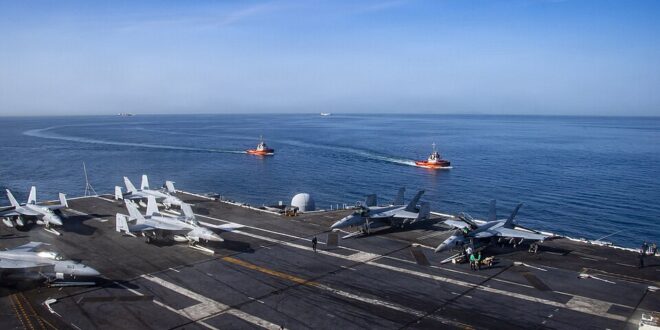
U.S. defense officials and analysts say the current posture in the Caribbean includes a carrier strike group centered on the USS Nimitz, along with guided missile destroyers and cruisers capable of launching precision strikes. Surveillance aircraft and drones have also been operating in the region, according to flight tracking data and defense sources.
Amphibious assault ships carrying Marine units have also been deployed or are preparing for rotation, though officials emphasized that additional forces would be required for any large-scale ground operation.
Military analysts say the positioning of assets provides Washington with a range of options, from limited strikes to more complex contingency operations, but stress that such planning does not necessarily signal intent to act.
“The Nimitz is likely there primarily for deterrence and signaling, though it could be used in a military operation if needed,” said Mark Cancian, a former Pentagon official and senior analyst at the Center for Strategic and International Studies.
He said naval and air assets in the region could support a range of missions, but cautioned that any escalation would depend on political authorization and broader strategic objectives.
U.S. officials also acknowledged that extended deployments are placing strain on naval forces, with several warships operating well beyond typical deployment lengths. Defense officials said this raises concerns about maintenance cycles, crew fatigue and long-term readiness.
“These back-to-back long deployments will add up over time,” one defense official said, speaking on the condition of anonymity to discuss operational matters. “Keeping them out there so long creates more problems in the long run when it comes to refitting and repairing those ships once they come home.”
The Navy declined to comment on specific deployments. The White House referred questions to the Pentagon.
The buildup comes as U.S. forces in other regions remain active, including operations in the Middle East, adding additional pressure on global force rotations.
Some of the largest carrier deployments in recent years have stretched beyond standard timelines, including extended missions involving multiple theaters of operation, defense officials said.
The USS Nimitz, originally slated for decommissioning planning in the coming years, has also seen its operational life extended, according to defense sources.
Officials emphasized that while military assets are in place to respond to contingencies, there is no confirmed order directing preparations for an invasion or active strike campaign against Cuba.
Any decision to escalate beyond deterrence or signaling would require explicit authorization from the president and coordination across multiple agencies, officials said.
For now, the posture reflects what defense analysts describe as a flexible readiness stance in a volatile regional environment, rather than a confirmed plan for imminent action.