Poli Alert Politics & Civics
Related Articles


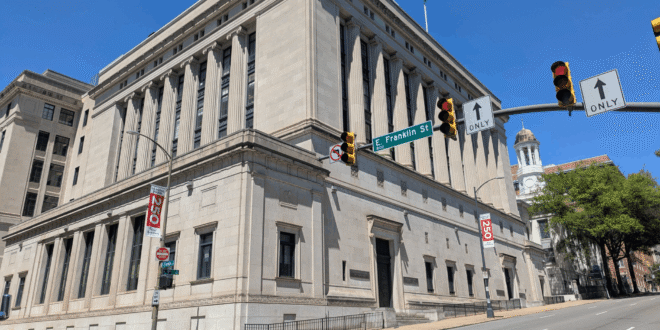
The Supreme Court of Virginia on Friday struck down the voter-approved redistricting amendment, upholding a lower court ruling that had declared the measure unconstitutional less than 24 hours after last month’s special election and briefly halted its implementation.
The high court found that the amendment itself was flawed because lawmakers approved the proposal after voting had already started in the 2025 House of Delegates elections, depriving more than 1.3 million Virginians of an opportunity to weigh the issue when choosing their representatives.
The 4-3 ruling leaves the state’s current congressional districts — which give Democrats a 6-5 advantage — in place throughout the 2026 midterm election and the rest of the decade, instead of proposed districts that Democrats believed could produce a 10-1 advantage.
The decision affirms the ruling by a Tazewell County judge who had blocked the amendment, siding with Republican challengers who argued the General Assembly failed to follow required constitutional procedures.
In the opinion, the justices said Article XII, Section 1 of Virginia’s constitution requires “an intervening general election” between the legislature’s first and second approvals of a constitutional amendment so voters can evaluate candidates based on their stance on the proposal.
“The purpose of Article XII, Section 1 is to give voters the opportunity to participate in the process of amending their Constitution,” Justice D. Arthur Kelsey wrote for the majority. “The commonwealth in this case … ended up denying over 1.3 million Virginians their constitutional right to have a voice in the debate over whether their Constitution should be amended.”
State Sen. Ryan T. McDougle, R-Hanover, the Senate Republican leader and one of the appellees in the case, praised the ruling as a reaffirmation of Virginia’s constitutional process.
“The Supreme Court ruling today affirms what we all know: you cannot violate the Constitution to change the Constitution,” McDougle said in a statement. He added that the decision showed “even the General Assembly must follow the law.”
McDougle called the ruling “not a partisan one — it is a constitutional one” and said “every Virginian wins.”
And Joe Gruters, chairman of the Republican National Committee, which had filed an amicus brief in the case and brought a similar challenge, praised the ruling and accused Democrats of trying to redraw Virginia’s congressional districts for political advantage ahead of the 2026 midterms.
“Democrats just learned that when you try to rig elections, you lose,” Gruters said in a statement. “Today, the Virginia Supreme Court sided with the rule of law and struck down Democrats’ unconstitutional maps.”
Gruters said the RNC had “led the charge in court against this blatant power grab” and accused Democrats of spending “more than $66 million into an effort to lock in control and silence voters.”
Meanwhile, Virginia Attorney General Jay Jones criticized the ruling and said the state is still considering its legal options.
“Today the Supreme Court of Virginia has chosen to put politics over the rule of law by issuing a ruling that overturns the April 21 special election on redistricting,” Jones said in a statement. “This decision silences the voices of the millions of Virginians who cast their ballots in every corner of the commonwealth.”
Jones defended the amendment process as “timely, constitutionally-compliant, and legally sound,” and accused the court’s Republican-appointed majority of “contort[ing] the plain language of the Constitution and Code of Virginia.”
He said his office is “evaluating every legal pathway forward to defend the will of the people and protect the integrity of Virginia’s elections.”
But Carl Tobias, a constitutional law professor at the University of Richmond, said an appeal to the Supreme Court of the United States would face significant practical and legal obstacles, particularly this late in the court’s term and so close to the 2026 elections.
“It is very late in the SCOTUS term for the U.S. Supreme Court justices to give an appeal a full-dress treatment, and the justices are often reluctant to rule on voting disputes as elections approach,” Tobias said.
“However, this is an important case, so it may be possible that SCOTUS would entertain an appeal.” He added that the nation’s highest court “may also be reluctant to second guess the interpretation of Virginia’s Constitution by a 4-3 majority of the Virginia Supreme Court justices.”
The court’s decision comes twelve days after justices heard oral arguments in the case, pressing attorneys on whether lawmakers complied with constitutional requirements governing amendments.
At issue was whether Democrats had lawfully advanced the amendment through the required legislative process before sending it to voters.
The case focused on disputes over whether there was a valid intervening General Election between legislative approvals, whether the public received the required notice ahead of the November election, and whether the amendment could legally be taken up during a special session initially called to address changes to the state budget.
During arguments, Justice Wesley G. Russell Jr. questioned both sides closely, probing the limits of legislative authority and whether alleged procedural defects should invalidate the measure already approved by the voters.
The morning after the hearing, the court denied a request by the Virginia Department of Elections to stay Tazewell County’s April 22 order while it continued to consider the case.
House Speaker Don Scott, D-Portsmouth, one of the chief architects of the amendment, said Friday that while he respects the court’s decision, the referendum still reflected the will of millions of Virginians who backed the measure at the ballot box.
“Three million people voted in a free and fair election,” Scott said in a statement. “We gave this decision to the voters — exactly where it belongs — and they spoke loud and clear.”
He added that supporters would “keep fighting for a democracy where voters — not politicians — have the final say.”
President Donald Trump weighed in on his Truth Social network, calling the ruling a “Huge win for the Republican Party, and America, in Virginia.”
GOP challenges test limits of amendment process
The lawsuit was filed in October by Republican lawmakers and a member of Virginia’s redistricting commission. Plaintiffs included state Sens. Ryan McDougle of Hanover and Bill Stanley of Franklin, Del. Terry Kilgore of Scott, and Commissioner Virginia Trost Thornton.
They argued that the legislature overstepped its authority and failed to follow the constitutionally mandated process, which requires amendments to pass the General Assembly twice with an intervening General Election before going to voters.
Tazewell County Circuit Court Judge Jack C. Hurley agreed in January, ruling that the amendment process was flawed.
The state appealed, and while the Supreme Court allowed the referendum to proceed ahead of the April 21 vote, it did not immediately resolve the underlying legal questions, setting the stage for a post-election hearing and this week’s decision.
The case has drawn national attention as both parties look ahead to the 2026 midterms, when control of the U.S. House could come down to a small number of competitive districts.
Virginia’s attempt to redraw congressional districts outside the normal post-census cycle became part of a broader national push by both parties to revisit House maps ahead of the midterms. The effort gained momentum after Trump encouraged Republican-led states, beginning with Texas, to pursue similar redistricting moves.
The lower court’s ruling April 22 briefly halted those plans in Virginia.
Hurley found lawmakers exceeded the scope of the special session in which the amendment was first introduced, failed to meet public notice requirements and did not properly satisfy the intervening election requirement.
Friday’s ruling from the Supreme Court of Virginia affirmed that decision, although it remains unclear if the ruling will be viewed as a precedent for two related cases currently moving through the court system, or whether these cases will be taken up separately by the high court.
David Richards, a political science professor at the University of Lynchburg, said the ruling represents both a political blow to Democrats and a broader affirmation that constitutional procedures still matter, regardless of the political stakes involved.
“The Virginia Supreme Court’s ruling today is an obvious setback for the Democrats, but it is also a win for making the state government pay closer attention to the rules,” Richards said.
“The whole referendum was hastily put together, and this is the result we get — so much time and money wasted in an effort to work around the rules and a districting system that the voters had just approved a few years earlier.”
He added that while “it may not be the outcome some people wanted,” the court “was right not to give in to pressure and instead soberly look at the process.”
From late-October push to legal showdown
The redistricting battle began on Oct. 27, just days before the Nov. 4 state elections, when Democratic lawmakers introduced a constitutional amendment during a special session of the General Assembly that would allow congressional districts to be redrawn outside of the once-in-a-decade redistricting cycle tied to the census.
The proposal immediately sparked partisan fights over both the timing of the amendment and Democrats’ push to redraw Virginia’s congressional map ahead of the midterms.
The House advanced the proposal the next day, and the Senate approved it on Oct. 31 along party lines, pushing it forward as required by the multi-step constitutional process, which required the amendment to pass again in a subsequent session.
When lawmakers returned to Richmond in January, they approved the legislation a second time, but the measure soon became entangled in legal challenges.
After Hurley first ruled the amendment invalid, the Supreme Court of Virginia intervened, allowing the referendum to proceed despite the lower court ruling. At the time, justices made clear they were not resolving the broader legal questions, only ensuring that voters would have the opportunity to weigh in.
The court’s earlier decision to allow the referendum onto the ballot led many legal observers to believe the amendment would likely survive if voters approved it.
As the legal fight continued, Democrats began outlining what the new congressional districts would look like. A proposed map released in early February that would likely favor them in most of Virginia’s 11 districts.
Republicans escalated their opposition soon after, filing additional legal challenges and seeking to block the vote. A temporary restraining order by the Tazewell County court applied locally, but the Supreme Court again stepped in to stay that order, allowing the referendum to proceed statewide.
Heated campaigns culminate in close final margin
The fight over the amendment intensified in the weeks leading up to the vote.
Outside groups backing both sides poured millions of dollars into the campaign in March, flooding voters with ads and mailers. Some of the messaging drew criticism for using civil rights-era imagery.
Both parties expanded outreach efforts as early voting data showed strong turnout in Republican-leaning parts of the state, making the final outcome harder to predict.
In the final days of the campaign, Gov. Abigail Spanberger ramped up her public support for the amendment while former Gov. Glenn Youngkin urged voters to reject the measure and continued pressing the courts to block the measure.
Voters ultimately approved the amendment by roughly three percentage points April 21, before the dispute returned to the Supreme Court.
With the Supreme Court’s decision now in place, the new congressional maps will not take effect, leaving Virginia’s current districts in place until a previously passed amendment requires the state’s bipartisan redistricting commission to draw new maps following the 2030 census.
by Markus Schmidt, Virginia Mercury
Virginia Mercury is part of States Newsroom, a nonprofit news network supported by grants and a coalition of donors as a 501c(3) public charity. Virginia Mercury maintains editorial independence. Contact Editor Samantha Willis for questions: [email protected].